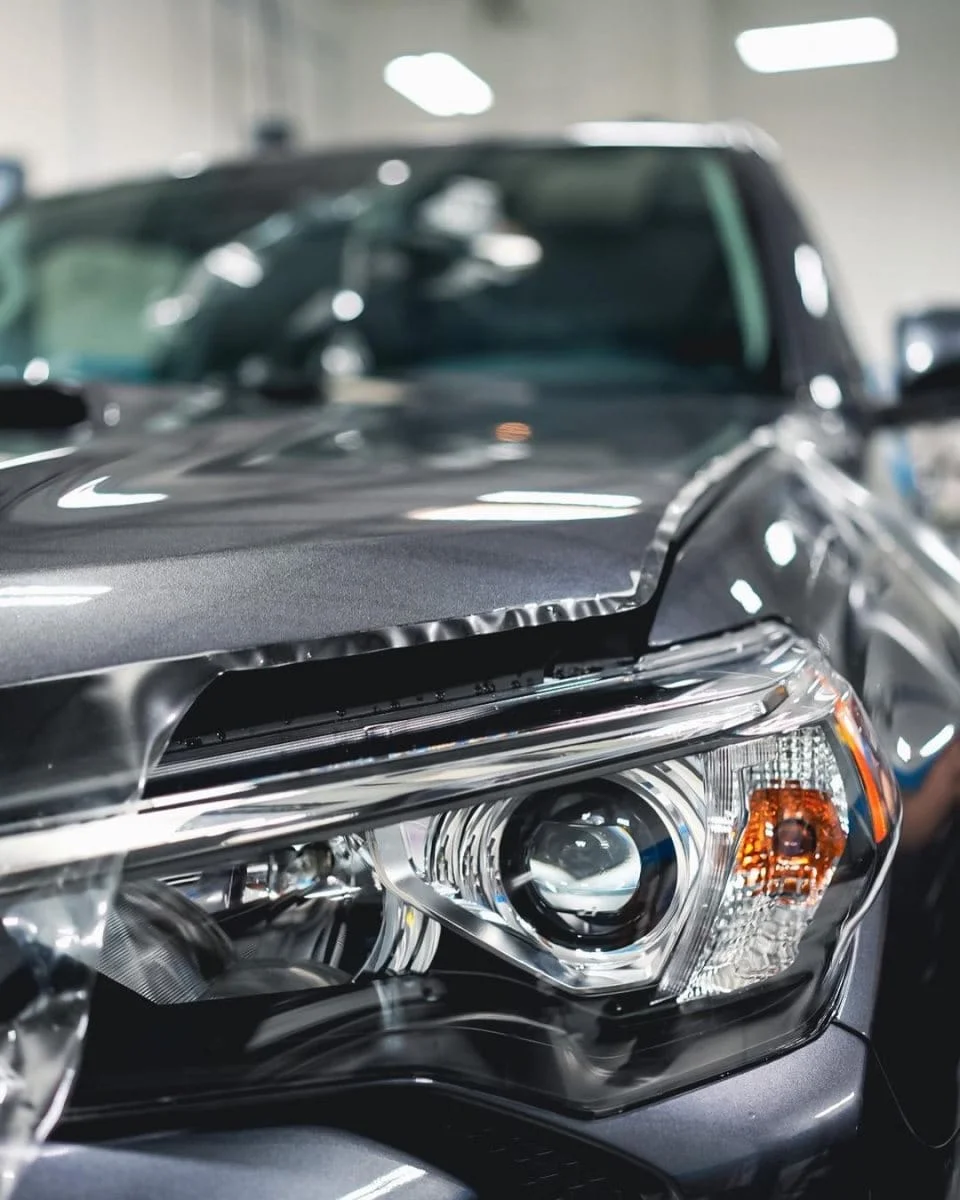
Paint Protection Film
PPF After Installation: Complete Care Guide

Blackout Team· Window Tinting Experts
·Updated ·14 min read

Summary / Direct Answer
Wait 48-72hr to rinse, 7 days for full wash. Cure 2-4 weeks; bubbles/haze are normal. Hand wash only with pH-neutral soap. Ceramic coat after full cure (4-6 wks). Quality film lasts 10-12yr. Avoid brush washes. Annual inspection recommended.
Everything you need to know after getting PPF installed. Learn what to expect, how to care for your new film, and what's normal during the curing process.
Your car is a valuable asset, so you want to preserve its new-car appearance for as long as you can. You've just invested in Paint Protection Film (PPF)—one of the best decisions you can make for your vehicle's paint. But what happens next? Understanding the curing process, knowing what's normal, and following proper care guidelines will ensure your PPF performs flawlessly for years.
The Curing Process: What Happens After Installation
Understanding PPF Curing
When PPF is installed, a water-based slip solution is used between the film and your paint. This allows the installer to position and adjust the film perfectly. After installation, this moisture needs to evaporate through the film—this is the "curing" process.
Typical curing timeline:
| Stage | Timeline | What You'll Notice |
|---|---|---|
| Initial cure | 0-48 hours | Film may look hazy or have visible moisture |
| Primary cure | 2-7 days | Most moisture evaporates, clarity improves |
| Full cure | 2-4 weeks | Complete moisture removal, film settles fully |
| Edge cure | 4-6 weeks | Wrapped edges fully adhere and stabilize |
Factors Affecting Cure Time
Faster curing:
- Warm temperatures (70-90°F)
- Low humidity
- Garage parking with good airflow
- Summer installation
Slower curing:
- Cold temperatures (below 50°F)
- High humidity
- Indoor parking with poor ventilation
- Winter installation
Bay Area consideration: Our mild climate means curing typically takes 2-3 weeks in summer, 4-6 weeks in winter/fog season.
What to Expect Immediately After Installation
Normal Temporary Imperfections
Don't panic if you see these—they're completely normal and will resolve during curing:
1. Small Water Bubbles
- Appearance: Tiny bubbles under the film, often at edges
- Cause: Trapped slip solution working its way out
- Timeline: Most disappear within 1-2 weeks
- Action: Do nothing—they'll evaporate naturally
2. Hazy or Milky Appearance
- Appearance: Film looks cloudy, especially in certain light
- Cause: Moisture between film and paint
- Timeline: Clears within 2-4 weeks
- Action: Normal—clarity improves as moisture evaporates
3. Slight Edge Lifting
- Appearance: Edges may appear slightly raised
- Cause: Film hasn't fully adhered yet
- Timeline: Settles within 2-4 weeks
- Action: Avoid touching or pushing edges during curing
4. Visible Install Lines
- Appearance: Faint lines where film was stretched
- Cause: Stress marks from installation process
- Timeline: Often disappear after first sun exposure
- Action: Park in sun to help film relax
5. Slight Texture Difference
- Appearance: PPF areas feel slightly different than bare paint
- Cause: Film surface has different texture than clear coat
- Timeline: Permanent—this is normal
- Action: Ceramic coating on top can create uniform feel
Permanent Characteristics to Expect
Some characteristics of PPF won't change—and they're not defects:
Visible Film Edges
Quality installations minimize edge visibility, but PPF edges may be visible in certain lighting or angles. This is especially true on:
- Hood edges
- Fender edges
- Mirror caps
- Headlight edges
Minimizing visibility:
- Wrapped edges (film tucked under panels) are less visible
- Ceramic coating creates uniform sheen
- Most edges become less visible as film settles
Slight Orange Peel Texture
High-quality PPF (XPEL, SunTek, STEK) has minimal texture, but some "orange peel" is normal:
- More visible on high-gloss paint colors
- Less visible on metallic or darker colors
- Premium films have smoother surface
Self-Healing Marks
You may temporarily see scratch marks before they self-heal:
- Light scratches disappear with heat (sunlight, warm water)
- Healing time: 15-60 minutes depending on temperature
- Deep scratches won't fully heal
Post-Installation Care Timeline
First 48 Hours (Critical Period)
DO: ✅ Park in a climate-controlled garage if possible ✅ Keep the vehicle dry ✅ Avoid extreme temperatures ✅ Let the film settle undisturbed
DON'T: ❌ Wash the car ❌ Touch or press on the film ❌ Try to "fix" bubbles or imperfections ❌ Use any sprays or treatments
Days 3-7 (Early Curing)
DO: ✅ Light rinse if needed (no pressure) ✅ Start normal (gentle) driving ✅ Monitor for any unusual lifting or bubbling
DON'T: ❌ Use high-pressure wash ❌ Scrub or rub the film ❌ Apply any coatings or sealants ❌ Pull on any edges
Weeks 2-4 (Primary Curing)
DO: ✅ Resume normal hand washing ✅ Use gentle touchless wash if needed ✅ Continue monitoring cure progress
DON'T: ❌ Use automatic car washes with brushes ❌ Apply wax to PPF areas ❌ Polish or compound the film
After Full Cure (4+ Weeks)
DO: ✅ Normal washing with PPF-safe products ✅ Apply ceramic coating for extra protection ✅ Apply PPF-specific sealants ✅ Enjoy worry-free driving!
Washing Your PPF-Protected Vehicle
Best Practices for PPF Washing
Recommended method: Two-bucket hand wash
- Pre-rinse — Remove loose dirt and debris
- Foam cannon/pre-wash — Loosen stuck contaminants
- Hand wash — Use microfiber mitt with pH-neutral soap
- Rinse — Top to bottom, remove all soap
- Dry — Microfiber towels or air blower
Products to use:
| Product Type | Recommended | Avoid |
|---|---|---|
| Car soap | pH-neutral, wax-free | Dish soap, harsh detergents |
| Drying | Microfiber, air blower | Chamois, cotton towels |
| Sealant | PPF-specific or ceramic | Traditional wax |
| Bug remover | Dedicated bug spray | All-purpose cleaners |
Removing Stubborn Contaminants
Bug splatter:
- Soak with bug remover spray
- Let sit 2-3 minutes
- Gently wipe with microfiber
- Rinse thoroughly
Tip: Remove bugs within 24-48 hours to prevent staining
Bird droppings:
- Wet with water immediately
- Place damp microfiber over dropping
- Let soak 5-10 minutes
- Wipe gently and rinse
Tip: Bird droppings are acidic—prompt removal prevents etching
Tree sap:
- Apply isopropyl alcohol (70%) or dedicated remover
- Let sit 1-2 minutes
- Gently wipe with microfiber
- Wash area with soap and water
Water spots:
- Spray with distilled water or water spot remover
- Wipe gently with microfiber
- Dry thoroughly to prevent recurrence
Long-Term PPF Maintenance
Monthly Maintenance Checklist
- Inspect edges for lifting or contamination
- Check for yellowing or discoloration
- Remove any stuck contaminants
- Apply quick detailer or spray sealant
Quarterly Maintenance
- Deep clean with decontamination wash
- Apply dedicated PPF sealant or ceramic boost
- Inspect for damage that needs professional attention
- Check self-healing function (light scratch test in hidden area)
Annual Professional Inspection
We recommend annual inspections to:
- Check overall film condition
- Address any lifting edges before contamination
- Assess if ceramic top coat needs refresh
- Identify damage requiring section replacement
Common Issues and Solutions
Issue: Edge Lifting After Curing
Causes:
- Contamination under the edge
- Poor initial adhesion
- Environmental damage (power washers, brush washes)
- Physical damage (impact, pulling)
Solutions:
- Minor lifting: Professional re-adhesion with heat
- Significant lifting: Section may need replacement
- Prevention: Avoid high-pressure water directly on edges
Issue: Yellowing
Causes:
- Low-quality film
- UV degradation (old or improper film)
- Chemical contamination
- End of film lifespan
Solutions:
- Quality film (XPEL, SunTek, STEK) resists yellowing
- Some yellowing after 7-10 years is normal
- Heavily yellowed sections should be replaced
Issue: Staining
Causes:
- Bug contaminants left too long
- Bird dropping etching
- Chemical spills
- Low-quality film with poor stain resistance
Solutions:
- Many stains can be removed by professional polishing
- Deep stains may require section replacement
- Prevention is key—prompt contaminant removal
Issue: Scratches That Won't Self-Heal
Causes:
- Scratch too deep (cut through clear coat of film)
- Film is old with degraded healing properties
- Temperature too cold for healing
Solutions:
- Try heating the scratch (hair dryer, warm water, sunlight)
- Deep scratches that cut through film won't heal
- Severely damaged sections may need replacement
Maximizing PPF Lifespan
Do These Things
- Wash regularly — Prevents contaminant bonding
- Park in garage when possible — Reduces UV exposure
- Apply ceramic coating on top — Extra protection and easier cleaning
- Remove contaminants quickly — Prevents staining
- Use touchless or hand wash — Avoid brush scratches
- Address issues early — Small problems become big ones
Avoid These Things
- Automatic car washes with brushes — Can scratch or lift edges
- High-pressure wash on edges — Forces water under film
- Petroleum-based products — Can degrade adhesive
- Abrasive polishes — Damage film surface
- Waxes with silicone — Create buildup, interfere with self-healing
- Neglecting problems — Early intervention saves money
PPF Life Expectancy
Quality Film Lifespan
| Film Brand | Expected Lifespan | Warranty |
|---|---|---|
| XPEL Ultimate Plus | 10-12 years | 10 years |
| SunTek Ultra | 10-12 years | 10 years |
| STEK DYNOshield | 10+ years | 10 years |
| 3M Pro Series | 7-10 years | 7-10 years |
| Budget films | 3-5 years | Limited |
Factors That Extend Lifespan
- Garage parking
- Regular washing
- Ceramic coating on top
- Avoiding brush washes
- Prompt contaminant removal
- Limited sun exposure
Factors That Shorten Lifespan
- Outdoor parking (constant UV)
- Infrequent washing
- Brush car washes
- Neglecting edges
- Chemical exposure
- Physical abuse
When to Consider Replacement
Signs Your PPF Needs Attention
Professional repair possible:
- Minor edge lifting
- Small areas of contamination
- Localized staining
- Minor scratch damage
Section replacement needed:
- Significant yellowing
- Large area lifting
- Deep cuts or tears
- Severe contamination under film
- Heavy staining
Full replacement recommended:
- Film is 10+ years old
- Multiple areas failing
- Widespread yellowing
- Warranty claim eligibility
Frequently Asked Questions
How long should I wait to wash my car after PPF installation?
Wait at least 48-72 hours for light rinsing, and 7 days for a full wash. This allows the adhesive to fully cure and prevents moisture from being trapped during the critical bonding period. After 7 days, you can resume normal hand washing with pH-neutral soap.
Why does my new PPF look hazy or cloudy?
This is completely normal during the curing process. Moisture trapped between the film and paint creates a hazy appearance that disappears as the water evaporates through the film. Full clarity typically returns within 2-4 weeks, depending on temperature and humidity. Cold or humid conditions may extend this timeline.
Can I apply ceramic coating over my new PPF?
Yes, and we highly recommend it—but wait for full cure first (typically 4-6 weeks). Ceramic coating on top of PPF provides enhanced hydrophobic properties, easier cleaning, and additional UV protection. It also creates a uniform appearance across PPF and non-PPF areas.
How do I know if bubbles under my PPF are permanent or will go away?
Water bubbles are small, clear, and move when you press them—these will evaporate within 1-3 weeks. Air bubbles are larger, static, and milky-white—these typically require professional attention if they persist past 2 weeks. Air bubbles during proper installation are rare with quality installers.
My PPF edges are lifting—is this covered under warranty?
Edge lifting depends on the cause. Covered: Manufacturing defects, adhesive failure, installation errors. Not covered: Damage from high-pressure washing, physical impact, improper cleaning, or third-party products. Contact your installer first—many edge issues can be resolved with professional resealing.
How often should I apply PPF sealant or ceramic boost?
Every 3-6 months is ideal for maintaining optimal protection and hydrophobicity. After washing, apply a PPF-safe sealant or ceramic booster spray and buff with a clean microfiber. This extends the life of any ceramic coating applied over PPF and maintains the self-cleaning properties.
Will PPF affect my car's resale value?
PPF typically increases resale value by preserving factory paint condition. Buyers appreciate protected vehicles because the paint underneath remains chip-free and scratch-free. Even if the PPF shows wear, it can be removed to reveal pristine paint—a major selling point for higher-end vehicles.
What should I do if I notice damage to my PPF?
Act quickly. Small issues caught early can often be repaired without full section replacement. For edge lifting, avoid pressing on it—this can push contaminants under the film. Contact your installer for assessment. Most shops offer free inspections and can often repair minor issues at low cost.
The Blackout Advantage
At Blackout Window Tinting, every PPF installation includes:
- Detailed post-installation walkthrough — We explain exactly what to expect
- Care instructions packet — Written guidelines for your reference
- Free 30-day inspection — We check cure progress at no charge
- Warranty registration — Your protection documented properly
- Lifetime support — Questions? We're always here to help
We've been installing PPF since the technology first emerged, and we've learned what separates good installations from great ones: proper preparation, quality film, skilled technique, and thorough customer education.
Ready for Protection That Lasts?
Understanding what comes after installation is just as important as choosing the right film. With proper care, your PPF will protect your paint for a decade or more.
Schedule Your PPF Installation → or call (408) 848-8468
📍 Visit us: 610 Holloway Rd, Gilroy (behind Target)
Serving Gilroy, Morgan Hill, San Jose, and the entire Bay Area since 1993.
Visit the Experts in Gilroy
Blackout Window Tinting is the Bay Area's premier choice for premium auto protection. Based in Gilroy at 610 Holloway Rd (behind Target), we've served the South County and Silicon Valley area for over 33 years. Whether you're coming from Morgan Hill, Hollister, or anywhere else in the Bay Area, we're your trusted local source for professional window tint, PPF, and ceramic coating.
📞 Questions? Call us at 408-848-8468 or get a free quote online.
Featured Brands
Learn more about the professional-grade products we use:
- SunTek PPF - View product details and specifications
- XPEL - View product details and specifications
- STEK PPF - View product details and specifications
33+ years
The team at Blackout Window Tinting has been serving the Bay Area since 1993, providing premium window tinting and vehicle protection services.
Window TintingPPFCeramic CoatingVehicle Wraps
Ready to upgrade your vehicle?
Experience the Blackout difference. Contact our expert team today for a custom consultation and white-glove service.
Get Your Free QuoteRecommended Services
Explore Paint Protection Film Solutions
Most readers of this article are researching paint protection film upgrades. Explore our precision-tailored service options.