Tips & Advice
Tint Shop Red Flags: Avoid Bad Installers

Blackout Team· Window Tinting Experts
·12 min read
Know what to look for before choosing a window tint shop. These 10 red flags indicate low quality work, shortcuts, or potential problems down the road.
Tint Shop Red Flags: How to Avoid Bad Window Tint Installers
A bad window tint job costs you twice—once for the work, again to have it redone. After 30+ years in the window tinting industry, we've seen countless customers come to us after getting burned by shops that cut corners, used inferior materials, or simply lacked the expertise to do the job right. Here's your comprehensive guide to identifying problematic tint shops before you hand over your keys and your money.
The Real Cost of a Bad Tint Job
Before diving into red flags, it's worth understanding what's actually at stake. A poor tint installation can result in:
- Bubbling and peeling that looks terrible within weeks or months
- Purple or hazy film from cheap dyes fading in California sun
- Scratched glass from improper installation techniques
- Legal trouble from illegally dark front windows
- Voided vehicle warranty on glass if damage occurs during installation
- Money wasted on removal and re-installation with quality film
- Time lost returning to have issues addressed (if the shop even fixes them)
The price difference between a cheap tint job and a quality one might be $100-200. But fixing a bad job costs $300-500 including removal, cleanup, and proper re-installation. Choose wisely the first time.
10 Red Flags When Choosing a Tint Shop
Red Flag #1: "Same Day, Any Vehicle" Promises
Why it's a problem:
Any shop that claims they can tint your car within an hour or guarantees same-day service for all vehicles is either rushing through jobs or grossly underestimating what quality work requires.
- Quality automotive tinting takes 2-4 hours minimum for sedans
- Larger vehicles, SUVs, and trucks require 3-5 hours
- Vehicles with complex curves (like Teslas) need even more time
- Rush jobs skip proper surface preparation
- Cure time discussions are ignored
- Detail work on film edges is compromised
- Quality inspection is skipped
What good shops actually say: "We need 3-4 hours, so plan to drop off in the morning and pick up in the afternoon" or "We'll keep it overnight to ensure proper curing."
The reality: Professional shops book appointments and manage their schedule to give each vehicle the time it deserves. They don't stack cars like an assembly line and crank them out.
Red Flag #2: No Film Brand Discussion
Why it's a problem:
When you ask "what film do you use?" and get vague answers like "it's professional grade" or "we use really good film," run. That's usually a sign they're using:
- Cheap, no-name film from Amazon or eBay
- Wholesale generic film with no manufacturer backing
- Whatever was cheapest at the distributors that week
- Film with no manufacturer warranty
What to expect from quality shops:
A professional shop should name specific brands—3M, LLumar, SunTek, XPEL, Madico—and explain the differences between their film lines. They should be able to discuss:
- Why they selected these brands
- The difference between ceramic, carbon, dyed, and metallic films
- Specific product line recommendations for your needs
- Warranty terms for each film option
Pro tip: Research the brands they mention. Reputable manufacturers have dealer locator tools that verify authorized installers.
Red Flag #3: Cash-Only Operation
Why it's a problem:
Legitimate businesses accept credit cards. Cash-only operations raise serious concerns:
- Hard to dispute if problems arise later
- May indicate tax avoidance or unlicensed operation
- Often no official business license or permits
- No paper trail for warranty claims
- Difficult to pursue if they close and reopen under a new name
- May indicate financial instability
Important exception:
Some established shops offer small cash discounts (typically 3-5%) to avoid credit card fees. That's fine—but they should still accept cards if you prefer. The red flag is when cash is the only option.
Red Flag #4: No Portfolio or Examples Available
Why it's a problem:
In 2026, there's no excuse for a tint shop not to have visual evidence of their work. Lack of portfolio suggests:
- They can't verify the quality of their work
- No accountability for past installations
- Possibly new, inexperienced, or operating under a new name after complaints
- Nothing to compare against their claims
- Possibly embarrassed by their actual work quality
What good shops have:
- Before/after photos organized by vehicle type
- Vehicle-specific examples matching your make/model
- Google reviews with customer-uploaded images
- Social media presence showing recent work
- Willingness to show you a car they're currently working on or just completed
Ask directly: "Can you show me photos of work you've done on my type of vehicle?" If they can't or won't, that's telling.
Red Flag #5: Won't Discuss VLT Percentages or Window Tint Laws
Why it's a problem:
California has specific laws about window tint darkness, and you are the one who gets the ticket—not the shop. If a shop can't or won't discuss visible light transmission (VLT) and legal limits, it indicates:
- Willingness to install illegal tint to make a sale
- Lack of knowledge about state regulations
- General lack of expertise and professionalism
- You're left holding the bag when stopped by police
What they should know (California specifics):
| Window Location | Legal Limit |
|---|---|
| Front windshield | Top 4" only (any darkness) |
| Front side windows | Must allow 70%+ light through |
| Rear side windows | Any darkness allowed |
| Rear window | Any darkness allowed |
A professional shop will:
- Proactively explain California's laws
- Recommend legal options for maximum benefit
- Discuss medical exemptions if applicable
- Never pressure you to go illegally dark on front windows
Red Flag #6: Parking Lot Operations or Mobile-Only Service
Why it's a problem:
Window tinting requires a controlled environment for proper installation. Operations in parking lots, driveways, or "we come to you" mobile services face serious quality challenges:
- Dust and debris contamination — Every speck becomes permanently trapped under the film
- No climate control — Extreme temperatures affect adhesive curing
- Wind issues — Even light breezes create installation problems
- Poor lighting — Makes edge work and inspection nearly impossible
- No accountability — Much harder to contact or find later
- Fly-by-night operations — Here today, gone when problems arise
What to look for instead:
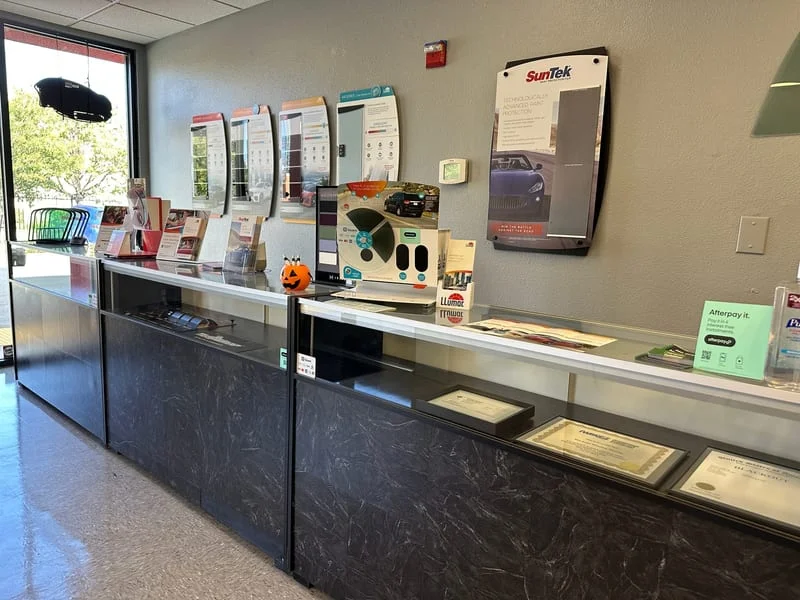
- Indoor installation bay with proper lighting
- Climate control (especially important in California's temperature extremes)
- Clean, organized workspace
- Visible business signage and established location
- Ability to visit and see their setup before booking
Legitimate mobile services exist for things like simple replacements or commercial fleet work at job sites, but initial passenger vehicle installations should happen in controlled environments.
Red Flag #7: Lifetime Warranty Without Paperwork
Why it's a problem:
"Lifetime warranty" means nothing without documentation. Shops that verbally promise lifetime coverage but provide no written terms are:
- Offering a warranty that may not actually exist
- Might close next month (rendering the warranty worthless)
- Have no manufacturer backing their claims
- Can deny claims later by disputing what was promised
- Making promises they have no intention of honoring
What you should actually receive:
- Written warranty document with specific terms
- Film brand warranty registration (not just shop warranty)
- Clear definition of what's covered (bubbling, peeling, fading, etc.)
- Installation date documented
- Coverage details (labor, film replacement, or both)
- Transferability terms if you sell the vehicle
- Manufacturer warranty card for the specific film installed
Quality film manufacturers provide: Individual warranty registration, often with online verification. 3M, LLumar, XPEL, and SunTek all offer this—if the shop installed their film, you should be able to verify it directly with the manufacturer.
Red Flag #8: Dramatically Lower Pricing Than Competition
Why it's a problem:
When a shop quotes $150 for a full ceramic tint job that competitors quote at $450, something's wrong. They're cutting corners somewhere—and that "savings" will cost you later.
Where low-price shops cut corners:
- Cheap film — Amazon/eBay-grade film that fades, bubbles, and peels
- Rushed installation — Volume over quality to make the math work
- Untrained staff — Lower labor costs, lower skill levels
- No real warranty — They can offer "lifetime warranty" knowing the film won't last and they may not be around
- Hidden upcharges — Low base price, then surprise charges for prep, removal, etc.
Reality check for Bay Area pricing:
| Film Type | Realistic Sedan Price | Too Low (Suspicious) |
|---|---|---|
| Dyed film | $200-300 | Under $150 |
| Carbon film | $300-400 | Under $200 |
| Quality ceramic | $400-600 | Under $300 |
| Premium ceramic | $550-750 | Under $400 |
It's okay to be budget-conscious. Good shops offer different price points with different film types. But if ceramic quotes from several shops average $500 and someone offers $200, that's not a better deal—it's a different (inferior) product.
Red Flag #9: No Discussion of Cure Time or Aftercare
Why it's a problem:
Every quality installation requires explanation of the curing process. Shops that send you off without instructions are either:
- Unaware of proper aftercare (concerning lack of expertise)
- Rushing to the next customer
- Not invested in your long-term satisfaction
- Using films that don't cure properly anyway
What good shops explain:
- Don't roll windows for 3-5 days (or longer in cold weather)
- Small water bubbles are normal initially and will dissipate as film cures
- Don't clean for 7-14 days after installation
- Avoid ammonia-based cleaners (Windex, etc.) permanently
- What to do if you notice problems during the cure period
Proper cure time matters. If someone says you can roll your windows down immediately or "it's ready to go," they're either using instant-cure film (lower quality adhesives) or setting you up for premature failure.
Red Flag #10: Aggressive Upselling and High-Pressure Tactics
Why it's a problem:
Professional shops educate; problematic shops pressure. Warning signs include:
- Pushing products you didn't ask about
- Creating urgency ("this price is today only")
- Criticizing your questions or film choices
- Making you feel stupid for not wanting the priciest option
- Focusing on sales numbers rather than your needs
- "My manager won't let me go lower" games
A healthy customer experience:
- Clear explanation of options at different price points
- Honest assessment of what you actually need
- Willingness to let you decide without pressure
- Answers to questions, not deflection
- Recommendation based on your situation, not their profit margin
What GOOD Tint Shops Look Like
Now that you know the red flags, here are the green flags that indicate quality:
Positive Signs to Look For
✅ Specific brand recommendations with reasoning — They carry quality films and can explain why
✅ Indoor, clean installation bay — Controlled environment for quality work
✅ Written warranty with manufacturer backing — Real protection, not empty promises
✅ VLT discussion unprompted — They bring up legal limits proactively
✅ Cure time education — Care about your long-term results
✅ Fair pricing with clear breakdown — Competitive but not suspiciously cheap
✅ Reviews mentioning quality AND service — Customers highlight both results and experience
✅ Years in business — Track record of longevity and satisfied customers
✅ Willingness to show current work — Nothing to hide
✅ Professional vehicle handling — Seat covers, floor mats, careful treatment
Questions to Ask Before Booking
- What specific film brands do you carry?
- Can I see photos of recent work on my vehicle type?
- How long will the installation take?
- What warranty paperwork will I receive?
- What are your aftercare instructions?
- What film do you recommend for my needs and why?
- What's included in the quoted price? Any extras?
- How long have you been in business at this location?
Our Approach at Blackout Window Tinting
We address every quality concern directly:
- Brands: LLumar, 3M, SunTek—we explain the differences and make recommendations based on your specific needs
- Facility: Climate-controlled, dust-free installation bay in our permanent Gilroy location
- Warranty: Written, manufacturer-backed warranties registered with the film manufacturer, plus our installation guarantee
- Education: Full explanation of laws, options, and aftercare before we proceed
- Pricing: Transparent pricing with no hidden charges or pressure tactics
- Experience: Over 30 years serving the Bay Area, thousands of satisfied customers
- Portfolio: Before/after photos, Google reviews with images, and current work you can view
📞 Want to see our work first? Schedule a shop tour or browse our gallery of completed installations.
Frequently Asked Questions
What is the most common sign of a low-quality tint shop?
The most reliable indicator is a dramatic price difference compared to established competitors. If average quotes for ceramic tinting are $450-500 and someone offers $200, they're cutting critical corners—either using inferior film, rushing installations, or skipping proper preparation. Legitimate price differences exist between film types, but prices significantly below market rate signal problems.
How can I tell if a tint shop uses quality film?
Ask for specific brand names and product lines. Quality shops proudly mention brands like 3M, LLumar, SunTek, XPEL, or Madico. They can show you film samples, explain the differences between ceramic and carbon options, and provide manufacturer warranty registration. If they say "it's good film" or "professional grade" without naming brands, that's concerning.
Is it bad if a tint shop is cash only?
While not an automatic disqualifier, cash-only operations raise legitimate concerns. It makes disputes harder, suggests possible licensing issues, eliminates paper trails for warranty claims, and may indicate financial instability. Some shops offer cash discounts while still accepting cards—that's acceptable. But cash-only is a meaningful red flag worth considering.
How long should a quality window tint installation take?
A proper installation on a standard sedan takes 3-4 hours minimum. SUVs and trucks require 3-5 hours. Vehicles with complex glass (Teslas, some luxury cars) need even more time. Any shop promising "one hour" or guaranteed same-day completion for all vehicles is rushing and cutting corners on preparation, installation precision, or inspection.
What questions should I ask a tint shop before booking?
The most important questions are: What specific film brands do you carry? What warranty paperwork will I receive? Can I see photos of work on my vehicle type? How long will installation take? What aftercare instructions should I follow? These questions reveal expertise, transparency, and quality standards—and problematic shops struggle to answer them satisfactorily.
What's the cure time for window tint, and why does it matter?
Quality installations require 3-5 days before rolling windows down, plus 7-14 days before cleaning. During curing, the adhesive fully bonds to glass and small water bubbles dissipate. Shops that skip this discussion may be using inferior quick-cure adhesives or simply don't care about long-term results. Proper cure time education is a sign of quality.
Can a bad tint job damage my car's windows?
Yes. Improper installation techniques can scratch glass surfaces with razor blades or hard tools. Incorrect film removal attempts can damage defrost lines. Poor adhesives can leave residue that requires professional removal. Some damage becomes apparent only after removing failed film—which is why getting it right the first time matters.
What should I do if my tint starts bubbling or peeling?
First, contact the shop that installed it—if you have a warranty, they should address it. If they're unresponsive, out of business, or if you lack documentation, you'll need to have another shop remove and reinstall. This typically costs $300-500+, which is why choosing a quality shop initially is cheaper than the "deal" that fails. Save all documentation in case you need to pursue warranty claims.
Visit the Experts in Gilroy
Blackout Window Tinting is the Bay Area's premier choice for premium auto protection. Based in Gilroy at 610 Holloway Rd (behind Target), we've served the South County and Silicon Valley area for over three decades. Whether you're coming from Morgan Hill, Hollister, or anywhere else in the Bay Area, we're your trusted local source for professional window tint, PPF, and ceramic coating.
📞 Questions? Call us at 408-848-8468 or get a free quote online.
Related: Automotive Window Tinting Services | Window Tint Laws California 2026
33+ years
The team at Blackout Window Tinting has been serving the Bay Area since 1993, providing premium window tinting and vehicle protection services.
Window TintingPPFCeramic CoatingVehicle Wraps