Choosing between LLumar's ceramic film options can be confusing—especially when comparing the IRX series to the Air 80. Both are premium ceramic films, but they're designed for different purposes. Let's break down the differences so you can pick the right film for your vehicle.
Quick Comparison: IRX vs Air 80
| Feature | LLumar IRX | LLumar Air 80 |
|---------|-----------|---------------|
| Primary Use | Side & rear windows | Windshields & front windows |
| VLT Range | 5% to 70% | ~80% (single shade) |
| Heat Rejection | Up to 66% TSER | Up to 59% TSER |
| IR Rejection | Up to 97% | Up to 96% |
| UV Rejection | 99%+ | 99%+ |
| Best For | Maximum heat + privacy | Clear visibility + heat control |
What is LLumar IRX?
The LLumar IRX is LLumar's flagship infrared-rejecting ceramic film. It uses advanced nano-ceramic technology specifically designed to target and block infrared heat—the type of heat you feel through glass even when the sun isn't directly on you.
IRX Key Specifications
- VLT Options: 5%, 15%, 25%, 35%, 40%, 50%, 70%
- Total Solar Energy Rejected (TSER): 54-66% depending on shade
- Infrared Rejection: Up to 97% at 900-1000nm
- UV Rejection: 99%+
- Signal Interference: None (metal-free construction)
The IRX excels at keeping your cabin cool while providing excellent privacy. The darker shades (5-35%) are popular for rear and side windows, while the lighter shades (50-70%) work well for front windows in states with strict tint laws.
What is LLumar Air 80?
The LLumar Air 80 is designed specifically for windshields and front windows where maximum visibility is essential. The "80" refers to approximately 80% visible light transmission—meaning it's nearly clear to the eye but still blocks significant heat.
Air 80 Key Specifications
- VLT: ~80% (appears nearly clear)
- Total Solar Energy Rejected (TSER): Up to 59%
- Infrared Rejection: Up to 96% at 900-1000nm
- UV Rejection: 99%+
- Signal Interference: None
The Air 80 is the go-to choice for windshield heat film because it meets most state visibility requirements while still providing substantial heat and UV protection.
Heat Rejection
Winner: IRX (in darker shades)
The IRX's darker shades reject more total solar energy because they block visible light in addition to infrared. An IRX 35% will keep your cabin cooler than an Air 80 because less light of all wavelengths enters the vehicle.
However, when comparing similar VLT levels, the performance gap narrows. LLumar IRX 70% and Air 80 perform comparably, with IRX having a slight edge.
Visibility
Winner: Air 80
This is Air 80's primary advantage. At 80% VLT, it's essentially invisible on the windshield. You get heat rejection without any noticeable darkening of your view—critical for windshields where any obstruction can be dangerous.
IRX at 70% VLT is also quite clear but has a subtle tint visible in certain lighting conditions.
Windshield Suitability
Winner: Air 80
For windshields specifically, Air 80 is purpose-built for the job:
- Meets California's 70% VLT requirement with room to spare
- Virtually invisible installation
- Tested and warrantied for windshield use
- Reduces eye strain without darkening your view
IRX can be used on windshields in its 70% shade, but Air 80 is optimized for this specific application.
Winner: IRX
For side and rear windows where you want both heat rejection AND privacy, IRX is the clear choice. The range of shade options (5-70%) lets you balance your needs:
- IRX 5-15%: Maximum privacy, strong heat rejection, limousine look
- IRX 25-35%: Good balance of privacy and visibility, popular choice
- IRX 50-70%: Lighter tint, maintains visibility, still solid heat rejection
Air 80's single ~80% VLT option doesn't provide meaningful privacy.
Best Use Cases
Use LLumar Air 80 When:
- Windshield heat film is your priority – Air 80 excels here
- You need to meet strict tint laws – 80% VLT passes everywhere
- You want heat reduction without visible tint – Nearly invisible
- Eye strain from sun is an issue – Reduces glare without darkening
- You have a Tesla or large glass roof – Great for panoramic roofs where you want light but not heat
Use LLumar IRX When:
- Side and rear windows need treatment – Full shade range available
- Privacy matters – Darker shades significantly reduce visibility into the cabin
- Maximum heat rejection is the goal – Darker IRX shades block more total energy
- You want a uniform look – IRX on all windows creates a cohesive appearance
- Front windows in permissive states – IRX 50-70% where laws allow
Combining IRX and Air 80
Many customers get the best results by using both films strategically:
Common Setup:
- Windshield: Air 80 (clear, legal, effective)
- Front Side Windows: IRX 50% or 70% (balances visibility with heat rejection)
- Rear Side & Back: IRX 20-35% (privacy + maximum cooling)
This combination gives you:
- Clear forward visibility (Air 80 windshield)
- Legal compliance (appropriate VLT per window)
- Maximum cabin comfort (IRX on sides and rear)
- Privacy where you want it (darker rear windows)
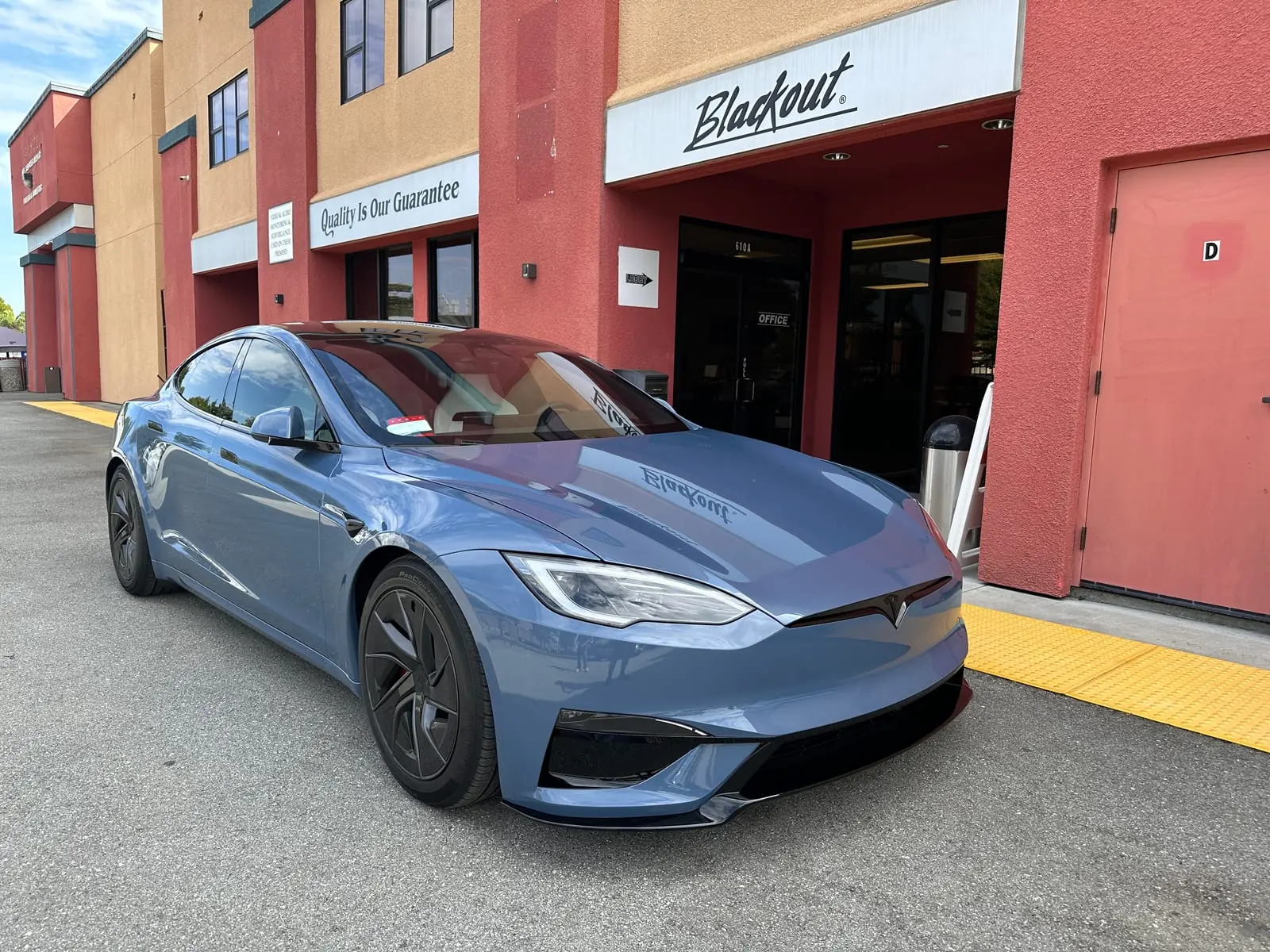
At Blackout Window Tinting, we install both films regularly and can help you determine the right combination for your vehicle and local laws.
Pricing Considerations
Both IRX and Air 80 are premium ceramic films with similar pricing per square foot. However, total cost varies by application:
- Air 80 Windshield Only: Typically $250-$450 depending on vehicle
- IRX Full Vehicle (excluding windshield): $480-$800+ depending on vehicle size
- Complete Package (Air 80 windshield + IRX everywhere else): $700-$1,200+
The investment in either film pays off through improved comfort, interior protection, and reduced AC load.
Frequently Asked Questions
Can I put IRX on my windshield?
Yes, but only in the 70% VLT shade to meet most state laws. IRX 70% works well, but Air 80 is specifically optimized for windshields and is our typical recommendation for that application.
Is Air 80 worth it if I'm already getting IRX on my side windows?
Absolutely. Even with IRX on all other windows, the windshield lets in significant heat. Adding Air 80 to the windshield can drop cabin temperatures noticeably, especially in direct sun.
Which film lasts longer?
Both films have excellent durability with similar warranties. With proper care, expect 10+ years from either film. The key is professional installation and avoiding ammonia-based cleaners.
Will either film interfere with my electronics?
No. Both IRX and Air 80 use ceramic (non-metallic) construction that doesn't interfere with cell signals, GPS, radio, toll transponders, or tire pressure monitoring systems.
What about LLumar CTX—where does it fit?
LLumar CTX is a mid-range ceramic film that slots between the dyed ATC and premium IRX. It offers good heat rejection at a lower price point but doesn't match IRX's infrared-targeting performance. For budget-conscious buyers who still want ceramic, CTX is worth considering.
Our Recommendation
For most vehicles, we recommend:
- Air 80 on the windshield for invisible heat protection
- IRX on front side windows at 50% or 70% (check your state laws)
- IRX on rear windows at 20-35% for privacy and maximum cooling
This setup gives you comprehensive protection without compromising visibility or legality.
Get Expert Advice
Choosing between LLumar films depends on your priorities, vehicle, and local regulations. At Blackout Window Tinting in Gilroy, we've installed thousands of LLumar films since 1993 and can help you find the perfect combination.
Learn more: Automotive Window Tinting — professional installation.
Contact us for a free consultation or call 408-848-8468 to discuss your project. We serve Gilroy, Morgan Hill, San Jose, Hollister, and the greater Bay Area.
Featured Brands
Learn more about the professional-grade products we use:
- LLumar - View product details and specifications