Tips & Advice
Hydrophobic vs Oleophobic Coatings: What's the Difference?

Blackout Team· Window Tinting Experts
·12 min read

Complete guide to hydrophobic and oleophobic coatings. Understand the difference, how they work, and which provides better protection for your vehicle.
Understanding Hydrophobic vs Oleophobic Coatings
These terms get thrown around in coating marketing—but what do they actually mean for your vehicle? Understanding the difference helps you choose the right protection and maintain realistic expectations.
This guide breaks down both coating properties, explains the science, and helps you understand why the best protection combines both.
The Basics: What These Terms Mean
Hydrophobic: "Water-Fearing"
Origin: Greek hydro (water) + phobic (fear)
What it does:
- Repels water-based liquids
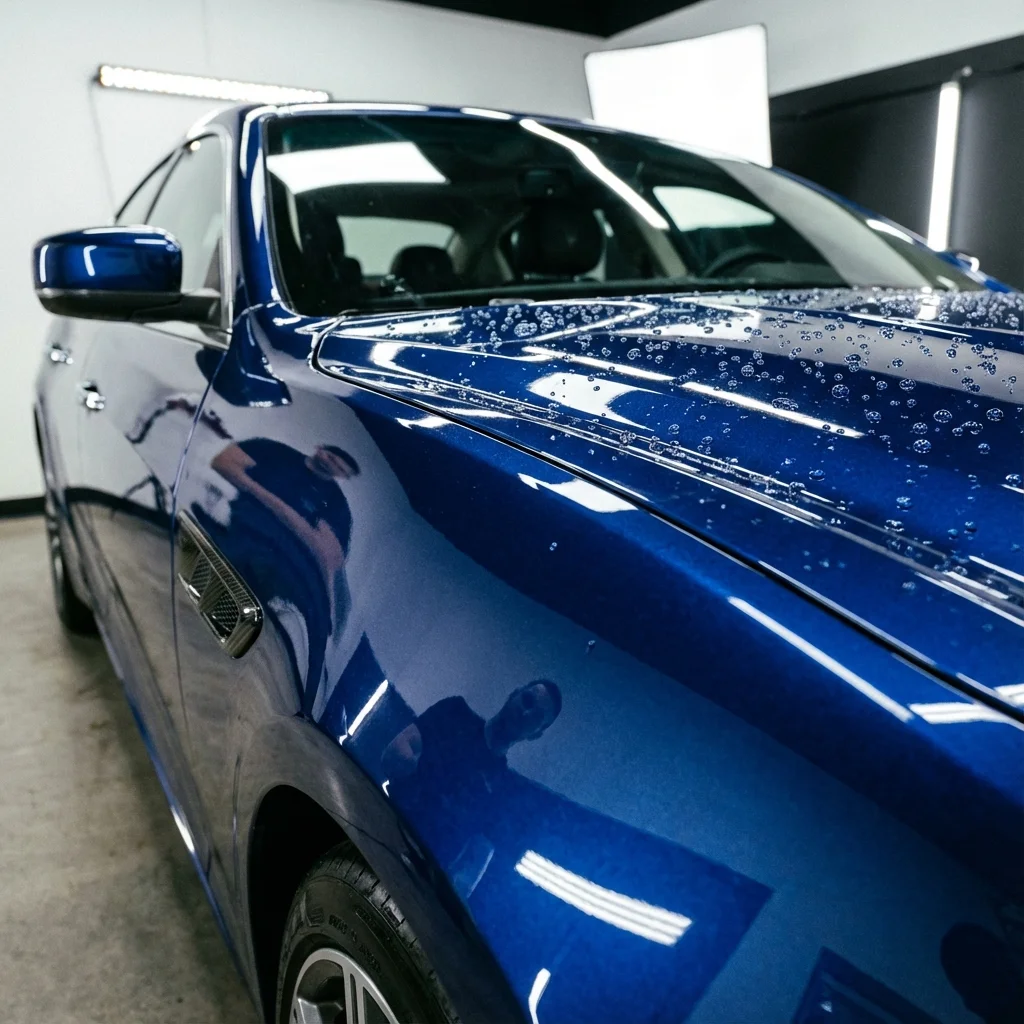
- Creates tight water beading
- Makes water slide off surfaces
- Reduces water spot formation
Visual effect: Water forms tight, spherical beads that roll off rather than spreading and sheeting across the surface.
Oleophobic: "Oil-Fearing"
Origin: Greek oleo (oil) + phobic (fear)
What it does:
- Repels oil-based substances
- Prevents fingerprint adhesion
- Releases bug splatter easier
- Resists tar and grease contamination
Visual effect: Oily substances don't stick well, wipe away easily, and leave less residue.
Why Both Properties Matter for Vehicles
Your car encounters both water-based and oil-based contamination daily:
Water-Based Contaminants
| Contaminant | Source | Damage Potential |
|---|---|---|
| Rain | Weather | Water spots from mineral content |
| Road spray | Other vehicles | Carries dirt and road salts |
| Dew | Morning condensation | Mineral deposits as it evaporates |
| Sprinkler overspray | Landscaping | High mineral content |
| Bird droppings | Birds | Acidic water-based component |
| Mud and dirt | Road conditions | Water-carried particles |
Why hydrophobic helps: Water beads up and rolls off, carrying contaminants with it rather than sitting and evaporating to leave residue.
Oil-Based Contaminants
| Contaminant | Source | Damage Potential |
|---|---|---|
| Bug splatter | Insect impacts | Proteins and fats etch paint |
| Road tar | Fresh asphalt, sealcoating | Bonds strongly, difficult removal |
| Exhaust residue | Traffic | Contains oily carbon deposits |
| Tree sap | Evergreen trees | Resinous oils, persistent |
| Industrial fallout | Factories, construction | Oil-based particles |
| Fingerprints | Human contact | Skin oils, visible on dark surfaces |
Why oleophobic helps: Oily contaminants don't bond to the surface, making removal easier and preventing etching.
The Science Behind These Properties
How Hydrophobic Works: Contact Angle
When a water droplet sits on a surface, it forms an angle with that surface at the edge—this is the contact angle.
Contact angle explained:
| Angle | Classification | Behavior |
|---|---|---|
| 0-90° | Hydrophilic (water-loving) | Water spreads, sheets |
| 90-120° | Hydrophobic | Water beads, rolls slowly |
| 120°+ | Super-hydrophobic | Tight beads, rolls quickly |
Quality ceramic coatings achieve: 100-120° contact angles, sometimes higher.
What affects contact angle over time:
- Contamination buildup
- Surface wear
- Chemical exposure
- UV degradation
How Oleophobic Works: Surface Energy
Oil and grease behavior depends on surface energy:
Low surface energy surfaces:
- Oils don't spread easily
- Contaminants don't bond well
- Easier to wipe clean
- Less residue left behind
High surface energy surfaces:
- Oils spread and wet the surface
- Contaminants bond strongly
- Difficult to clean
- Residue remains
Oleophobic coatings provide: Extremely low surface energy for oil-based substances.
The Molecular Level
Both properties come from the molecular structure of the coating:
Hydrophobic coatings use:
- Silicon dioxide (SiO2) as primary component
- Fluoropolymers in some formulations
- Nano-scale surface texturing
Oleophobic coatings require:
- Fluorinated compounds (similar to Teflon)
- Specialized polymer chains
- More complex chemistry than hydrophobic alone
Coating Types and Their Properties
Not all coatings provide both properties equally:
Traditional Wax (Carnauba)
| Property | Rating |
|---|---|
| Hydrophobic | ⭐⭐⭐ Moderate |
| Oleophobic | ⭐ Low |
| Durability | 4-8 weeks |
Characteristics:
- Provides decent water beading initially
- Little oil resistance
- Needs frequent reapplication
- Warm, organic appearance
Synthetic Sealants
| Property | Rating |
|---|---|
| Hydrophobic | ⭐⭐⭐⭐ Good |
| Oleophobic | ⭐⭐ Low-Moderate |
| Durability | 3-6 months |
Characteristics:
- Better water performance than wax
- Improved bug release
- Longer lasting than wax
- Less depth than carnauba
Basic Ceramic Coatings
| Property | Rating |
|---|---|
| Hydrophobic | ⭐⭐⭐⭐⭐ Excellent |
| Oleophobic | ⭐⭐⭐ Moderate |
| Durability | 1-3 years |
Characteristics:
- Strong water beading
- Improved contamination release
- Significant durability improvement
- Entry point to ceramic technology
Premium Ceramic Coatings
| Property | Rating |
|---|---|
| Hydrophobic | ⭐⭐⭐⭐⭐ Excellent |
| Oleophobic | ⭐⭐⭐⭐ Good |
| Durability | 3-5+ years |
Characteristics:
- Exceptional water behavior
- Strong oil resistance
- Professional-only application
- Maximum protection available
Graphene-Infused Coatings
| Property | Rating |
|---|---|
| Hydrophobic | ⭐⭐⭐⭐⭐ Excellent |
| Oleophobic | ⭐⭐⭐⭐⭐ Excellent |
| Durability | 3-7 years |
Characteristics:
- Best of both properties
- Reduced water spotting tendency
- Additional heat dissipation
- Premium pricing
Real-World Impact: What You'll Notice
Hydrophobic Benefits in Daily Use
After rain:
- Water beads and rolls off at speed
- Less water remains to dry and spot
- Faster natural drying
- Cleaner appearance without wiping
During washing:
- Water sheets off more completely
- Drying time significantly reduced
- Fewer towels needed
- Less risk of water spot formation
Self-cleaning effect:
- Light dust rinses away in rain
- Less buildup between washes
- Looks cleaner with less effort
Oleophobic Benefits in Daily Use
Bug removal:
- Bugs don't stick as strongly
- Wipe off with light pressure
- Less scrubbing required
- Reduced paint etching risk
Tar and road grime:
- Releases more easily
- Less aggressive products needed
- Reduced risk of scratching during removal
Fingerprint resistance:
- Less visible when touching paint
- Easier to wipe away
- Matters especially on dark colors
Overall cleaning:
- Less time spent on stubborn contamination
- Reduced product usage
- Gentler cleaning process possible
Application Areas and Priorities
Exterior Paint
Priority: Hydrophobic with good oleophobic properties
Why: Paint encounters everything—water, bugs, tar, and fingerprints all matter.
Best coating: Premium ceramic with strong oleophobic characteristics
Glass Surfaces
Priority: Hydrophobic critical, oleophobic helpful
Why: Rain visibility is the primary concern. Oil smudges from windshield wipers and fingerprints secondary.
Best coating: Glass-specific hydrophobic coating
Special note: The visibility improvement from hydrophobic glass coating is dramatic—rain beads and blows off at highway speeds, reducing need for wipers.
Wheels
Priority: Both properties equally important
Why: Wheels encounter brake dust (iron particles), road tar, and water constantly.
Best coating: Wheel-specific ceramic coating rated for high heat
Benefits:
- Brake dust releases more easily
- Road tar wipes off
- Water spots prevented
- Cleaning frequency reduced
Interior Screens and Displays
Priority: Oleophobic is primary concern
Why: Fingerprints are the main challenge for touchscreens and displays.
Application: Interior screen protection products (different from exterior coatings)
Trim and Plastics
Priority: UV protection with hydrophobic properties
Why: Trim primarily needs UV protection against fading, with easy cleaning as secondary benefit.
Measuring and Testing These Properties
Testing Hydrophobic Performance
Water bead test:
- Spray water on coated surface
- Observe bead shape (tighter = more hydrophobic)
- Tilt surface and observe movement (faster roll = better)
- Check if water slides off or sticks
Quantitative measurement:
- Contact angle goniometer measures exact degrees
- Professional testing uses standardized equipment
- DIY testing is visual/qualitative
Testing Oleophobic Performance
Marker test:
- Write on surface with permanent marker
- Wipe immediately
- Observe how easily it removes
- Check for residue
Fingerprint test:
- Touch surface with oily fingers
- Observe print visibility
- Wipe with microfiber
- Check for remaining mark
What Degrades These Properties
Hydrophobic degradation:
- Contamination buildup
- Mineral deposits from water
- Improper cleaning products
- UV exposure over time
Oleophobic degradation:
- Solvent exposure
- Abrasive cleaning
- Time and weathering
- Heavy contamination
Maintaining Hydrophobic and Oleophobic Properties
Proper Washing Technique
DO:
- Use pH-neutral soap
- Wash in straight lines
- Use quality microfiber
- Dry completely
DON'T:
- Use dish soap (strips protection)
- Use circular motions (creates swirls)
- Air dry (causes water spots)
- Use dirty towels
Recommended Products
| Product Type | Purpose | Frequency |
|---|---|---|
| pH-neutral wash | Safe cleaning | Every wash |
| SiO2 spray | Boost hydrophobic | Monthly |
| Ceramic detail spray | Refresh protection | Weekly/bi-weekly |
| Tar remover | Oil contamination | As needed |
Professional Maintenance
What we recommend:
| Service | Frequency | Purpose |
|---|---|---|
| Decontamination | Every 6 months | Remove bonded particles |
| Coating boost | Annually | Restore hydrophobic peak |
| Full inspection | Annually | Assess coating condition |
Choosing the Right Coating Products
For Maximum Hydrophobic Properties
Look for:
- High SiO2 concentration
- Contact angle specifications (110°+)
- "Self-cleaning" marketing claims (usually indicates strong hydrophobic)
For Maximum Oleophobic Properties
Look for:
- "Anti-fingerprint" or "smudge-resistant" claims
- Fluoropolymer content
- Bug and tar release specifications
For Best of Both
Choose:
- Premium ceramic coatings ($1,500+ typically)
- Graphene-infused formulations
- Professional-grade products only
Our Coating Approach
We use ceramic coating products that prioritize both properties:
Gtechniq Crystal Serum:
- Excellent hydrophobic (105°+ contact angle)
- Strong oleophobic properties
- Industry-leading durability
Gyeon MOHS+:
- Outstanding water behavior
- Good oil resistance
- Excellent value proposition
Glass-specific coatings:
- Optimized for windshield application
- Maximum rain visibility improvement
- Long-lasting hydrophobic effect
Frequently Asked Questions
Which property is more important?
For overall vehicle protection, hydrophobic is slightly more important because water exposure is more frequent. However, oleophobic dramatically improves day-to-day cleaning ease.
Can I have one without the other?
Basic coatings often provide hydrophobic without strong oleophobic properties. Both require quality coatings, but oleophobic is typically the harder property to achieve.
How quickly do these properties fade?
Quality coatings maintain strong hydrophobic properties for years. Oleophobic properties may diminish slightly faster but remain functional for the coating's lifespan.
Does car color affect these properties?
No—the properties are in the coating, not affected by underlying paint color. However, dark colors show contamination more, making these properties feel more valuable.
Ready for Complete Protection?
Get a coating that delivers both hydrophobic and oleophobic properties—making your vehicle easier to clean, better protected, and stunning to look at.
📞 Discuss coating options: Call (408) 848-8468
📍 Visit our shop: 610 Holloway Road, Gilroy
We'll explain the specific properties of each coating option and help you choose the right protection for your vehicle and needs.
33+ years
The team at Blackout Window Tinting has been serving the Bay Area since 1993, providing premium window tinting and vehicle protection services.
Window TintingPPFCeramic CoatingVehicle Wraps