Window Tinting
Home Security Window Film: Bay Area Protection Guide

Blackout Team· Window Tinting Experts
·Updated ·8 min read
Learn how security window film protects your home from break-ins, storms, and accidents. Complete guide to residential safety film options, costs, and
Your home has dozens of windows. Every single one is a potential entry point.
Glass breaks easily. Standard residential glass shatters with one strike from a rock, brick, or elbow. That's why 65% of home burglaries involve forced entry through windows or glass doors.
Security window film changes the math entirely.
What Is Residential Security Film?
Security film (also called safety film) is a thick, multi-layer polyester film applied to the interior surface of your windows. When the glass breaks:
The shattered pieces stay bonded to the film.
Instead of creating an instant opening, the window holds together as a broken-but-intact barrier. A burglar now faces:
- Extended entry time — what should take 2 seconds now takes minutes
- Increased noise — repeated strikes draw neighbor attention
- Visible criminal activity — no quick, quiet entry
- Physical risk — shattered glass held by film creates dangerous edges
Most residential burglars operate on a 90-second rule. If they can't get in within 90 seconds, they move on. Security film buys you that time.
How Residential Security Film Differs from Commercial
Home security film installation has unique requirements:
| Factor | Residential | Commercial |
|---|---|---|
| Glass types | Single/double pane, various ages | Often newer, standardized |
| Aesthetics | Must remain invisible | Some visible hardware acceptable |
| Coverage | Every accessible window | Ground floor, high-risk areas |
| Frame types | Wood, vinyl, aluminum mix | Usually uniform |
| Installation | Minimize home disruption | Business hours acceptable |
We approach residential installations with extra attention to preserving your home's appearance while maximizing protection.
Protection Levels: What Thickness Do You Need?
Security films are measured in mils (thousandths of an inch):
4 Mil (Entry Level)
- Protection: Basic shatter resistance
- Best for: Interior glass, accident protection
- Break-in deterrent: Minimal
- Cost: Most affordable
8 Mil (Standard Security)
- Protection: Good hold-together strength
- Best for: Average-risk neighborhoods
- Break-in deterrent: Moderate—adds 30-60 seconds
- Cost: Mid-range
12-14 Mil (Enhanced Security)
- Protection: Excellent resistance to repeated strikes
- Best for: Ground-floor windows, sliding doors
- Break-in deterrent: Strong—can add 2+ minutes
- Cost: Premium
- Our recommendation for Bay Area homes
20+ Mil (Maximum Security)
- Protection: Approaches impact-resistant glass
- Best for: High-value homes, high-risk areas
- Break-in deterrent: Maximum available from film
- Cost: Highest
- Note: Requires professional frame attachment for full effectiveness
Critical Windows: Where to Install First
Not every window needs the same protection. Here's our prioritization:
Priority 1: Ground Floor Entry Points
- Sliding glass doors — #1 entry point for burglars
- French doors — large glass panels, often overlooked
- Side/back door windows — less visible to neighbors
- Basement windows — hidden access points
Priority 2: Hidden Windows
- Side-of-house windows — blocked from street view
- Windows behind landscaping — natural concealment
- Garage entry door — often forgotten
Priority 3: Visible but Accessible
- Front-facing ground floor — deterrent effect from visibility
- Second-floor accessible from roofs/trees
Lower Priority
- Upper floors without access
- High, small windows
Budget tip: Start with Priority 1 windows at 12-14 mil, then expand coverage over time.
Beyond Break-Ins: Complete Home Protection
Security film protects against multiple threats:
Storm and Debris Protection
Bay Area homes face:
- Earthquake aftermath — falling objects, structural stress
- Wind-driven debris — especially near coast and hills
- Fallen branches — common during winter storms
When window glass shatters during a storm, security film:
- Prevents glass shards from flying into living spaces
- Maintains weather barrier until repairs
- Protects occupants from injury
Accident Protection
Inside your home:
- Children playing — balls, toys, roughhousing
- Pet incidents — dogs jumping at windows
- Furniture movement — accidents happen
- Falls against glass — especially dangerous for elderly
Security film turns a potential medical emergency into a repair job.
UV Protection
Most security films block 99% of UV rays, protecting:
- Flooring — hardwood, carpet, and tile from fading
- Furniture — upholstery and wood from sun damage
- Artwork — irreplaceable items from degradation
- Your skin — even indoors, UV exposure adds up
Installation Process: What to Expect
Pre-Installation
- Assessment — we measure all windows, note glass types
- Recommendation — film thickness matched to each window's risk level
- Scheduling — typically 4-8 hours for whole-house installation
Installation Day
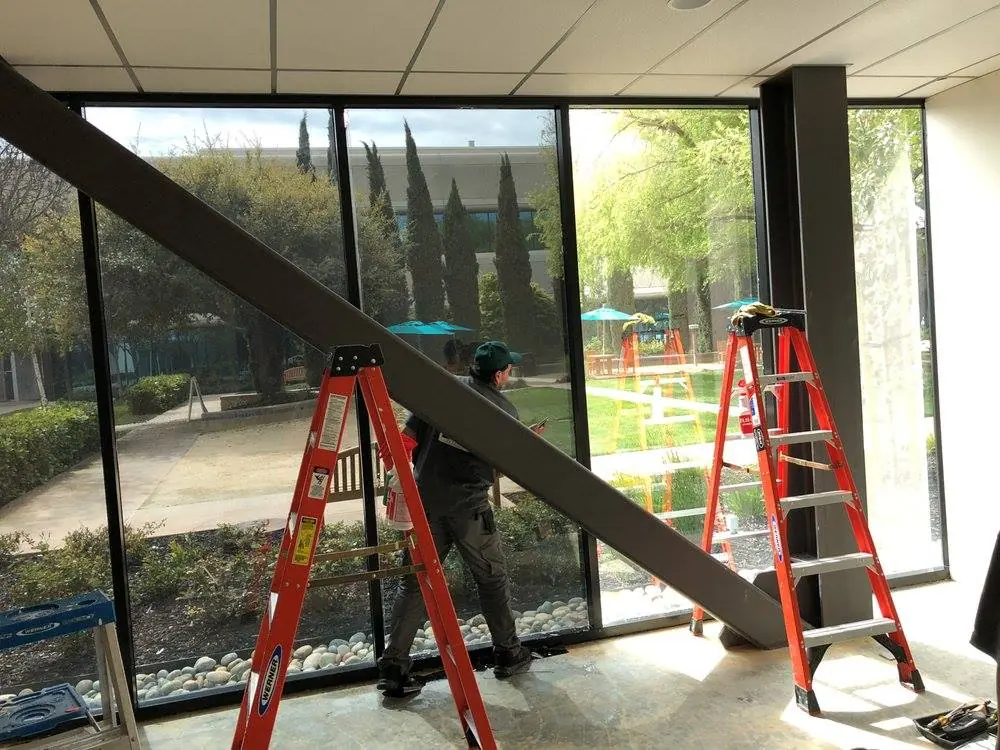
- Preparation — windows cleaned thoroughly (both sides when accessible)
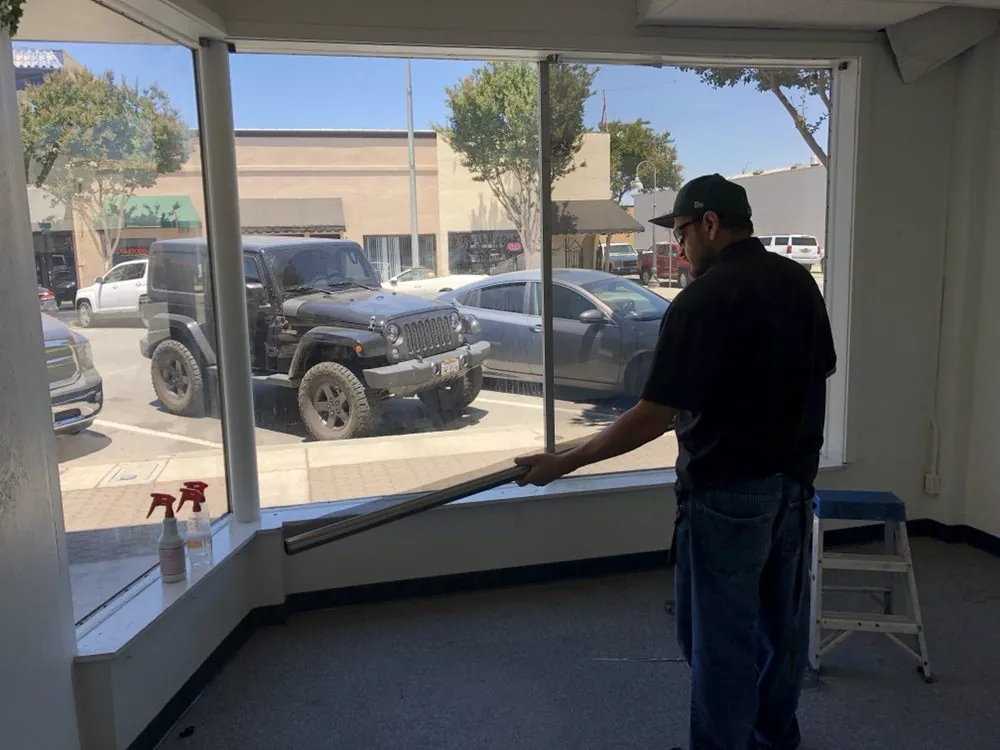
- Film cutting — precision-cut to each window's exact dimensions
- Application — wet application method for bubble-free results
- Squeegee — removing water and ensuring complete adhesion
- Edge sealing — critical for security performance
- Curing time — full strength in 30 days, but safe immediately
Post-Installation
- Visual inspection — some small water bubbles normal (disappear within 2-4 weeks)
- Operation test — windows still open and close normally
- Care instructions — provided for long-term maintenance
Cost Guide: Residential Security Film
Pricing for Bay Area homes:
| Coverage | 8 Mil Film | 12-14 Mil Film | 20+ Mil Film |
|---|---|---|---|
| 5 windows (ground floor focus) | $400-$600 | $600-$900 | $900-$1,400 |
| 10 windows (comprehensive ground) | $700-$1,000 | $1,000-$1,500 | $1,500-$2,500 |
| Whole house (15-20 windows) | $1,000-$1,800 | $1,800-$2,800 | $2,800-$4,500 |
| Sliding glass doors (pair) | $300-$450 | $450-$700 | $700-$1,000 |
Factors affecting cost:
- Window accessibility (second floor costs more)
- Glass condition (old, fragile glass requires extra care)
- Window shapes (curved or unusual shapes add time)
- Current treatments (removing old film if present)
Security Film vs. Other Options
How does film compare to alternatives?
| Option | Upfront Cost | Protection Level | Appearance | Maintenance |
|---|---|---|---|---|
| Security film | $$ | Good-Excellent | Invisible | Minimal |
| Security bars | $$$ | Excellent | Visible, can look prison-like | Annual inspection |
| Impact glass replacement | $$$$ | Excellent | Invisible | None |
| Security system | $-$$$$ | None (detection only) | Sensors visible | Monthly monitoring |
Security film offers the best balance of protection, aesthetics, and cost for most homes.
Combining Protection Layers
For maximum home security:
- Security film — delays entry, creates barrier
- Security system — detects attempts, alerts authorities
- Motion lights — eliminates hiding spots
- Reinforced door hardware — protects other entry points
- Visible deterrents — signs, cameras (real or decoy)
Security film is the foundation—it buys time for other systems to work.
Our Residential Installation Standards
At Blackout Window Tinting, residential security film includes:
Premium films only:
- LLumar Safety & Security Series
- 3M Safety & Security Films
- Films meeting ANSI Z97.1 safety glazing standards
- View our safety & security film services →
Complete installation:
- Full edge-to-edge coverage
- Proper edge sealing
- Frame attachment on 14+ mil installations (when applicable)
- Written warranty
Protect Your Home Today
Your family's safety is worth protecting. Security film is one of the most cost-effective upgrades you can make.
📞 Schedule a home security assessment — we'll identify your highest-risk windows and recommend the right protection.
📍 Visit our showroom — see and feel the difference film thickness makes.
Related Resources
- Commercial Protection: Commercial Window Tinting Security Film
- Vehicle Protection: Smash-and-Grab Protection Film
- Residential Tinting: 10 Benefits of Residential Window Tinting
Visit the Experts in Gilroy
Blackout Window Tinting is the Bay Area's premier choice for premium auto protection. Based in Gilroy at 610 Holloway Rd (behind Target), we've served the South County and Silicon Valley area for over 30 years. Whether you're coming from Morgan Hill, Hollister, or anywhere else in the Bay Area, we're your trusted local source for professional window tint, PPF, and ceramic coating.
📞 Questions? Call us at 408-848-8468 or get a free quote online.
Security Film FAQs for Homeowners
How long does residential security film last?
Quality security film lasts 15-20 years with proper care. We warranty our residential installations.
Will security film change how my windows look?
No. Security film is optically clear—visitors won't notice it. Some films have slight tint options if desired for privacy.
Can I install security film myself?
While DIY kits exist, security film installation requires proper technique for full effectiveness. Improper installation leaves gaps, bubbles, or poor edge adhesion that compromises protection.
Does security film affect my home insurance?
Some insurers offer discounts for security upgrades. Check with your provider—security film may qualify.
Can security film be applied to double-pane windows?
Yes, with proper film selection. We use films rated for insulated glass units (IGUs) to prevent thermal stress.
31+ years
The team at Blackout Window Tinting has been serving the Bay Area since 1993, providing premium window tinting and vehicle protection services.
Window TintingPPFCeramic CoatingVehicle Wraps