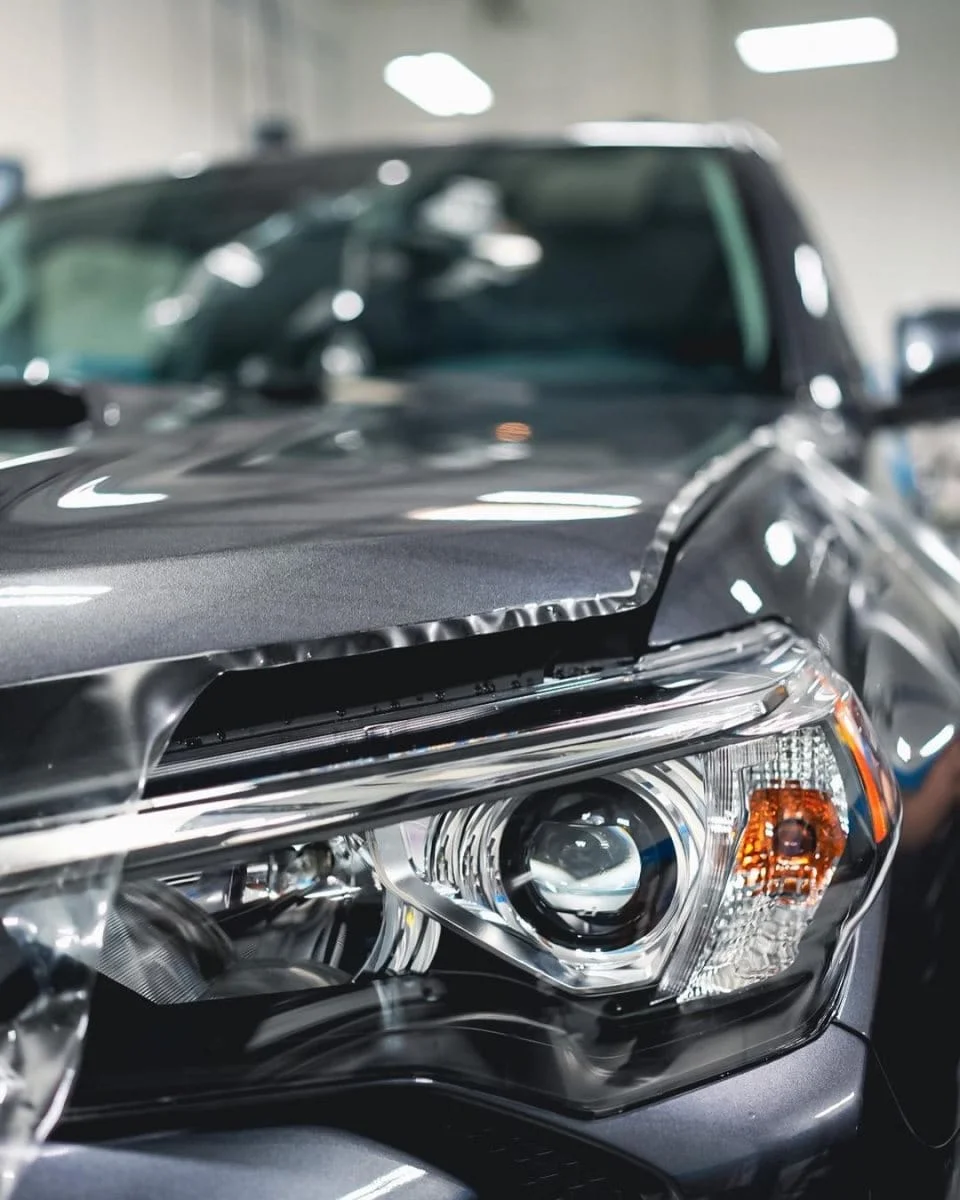
Paint Protection Film (PPF) is the ultimate shield for your vehicle's paint. But with prices ranging from $300 to $6,000+, is it worth the investment? This comprehensive guide covers everything you need to know before getting PPF in 2026.
At Blackout Window Tinting, we've installed thousands of PPF applications since 1993. Here's our honest, complete guide.
What is Paint Protection Film (PPF)?
Paint Protection Film—also called "clear bra"—is a transparent, self-healing urethane film applied to your vehicle's paint to protect against:
- Rock chips from highway debris
- Scratches from bushes, keys, car washes
- Bug acid and bird droppings
- UV damage and oxidation
- Water spots and mineral etching
Think of it as an invisible armor for your paint.
PPF Quick Facts
| Specification | Details |
|---------------|---------|
| Material | Thermoplastic polyurethane (TPU) |
| Thickness | 6-8 mil (0.006-0.008") |
| Lifespan | 5-10+ years |
| Self-healing | Yes (heat-activated) |
| Visibility | Nearly invisible when installed |
| Removable | Yes, without damage |
How Much Does PPF Cost in 2026?
PPF pricing depends on coverage area and film brand:
Partial Coverage
| Package | Coverage | Cost Range |
|---------|----------|------------|
| Front Bumper | Bumper only | $300-$500 |
| Partial Front | Hood, bumper, mirrors | $800-$1,500 |
| Full Front | Hood, bumper, fenders, mirrors | $1,500-$2,500 |
| Track Package | Full front + rockers + door edges | $2,500-$3,500 |
Full Vehicle Coverage
| Vehicle Type | Full PPF Cost |
|--------------|---------------|
| Compact Car | $4,000-$5,000 |
| Mid-Size Sedan | $4,500-$5,500 |
| SUV | $5,000-$6,500 |
| Large SUV/Truck | $6,000-$7,500 |
| Tesla Model 3/Y | $5,000-$6,000 |
| Exotic/Luxury | $6,500-$10,000+ |
What Affects PPF Cost?
| Factor | Impact |
|--------|--------|
| Vehicle size | Larger = more material = higher cost |
| Film brand | Premium brands (XPEL, SunTek) cost more |
| Coverage level | Full vehicle vs partial |
| Paint correction | Prep work adds $200-$500+ |
| Installer experience | Expert installers charge premium |
Top PPF Brands Compared
XPEL Ultimate Plus
| Feature | Rating |
|---------|--------|
| Self-Healing | ⭐⭐⭐⭐⭐ |
| Stain Resistance | ⭐⭐⭐⭐⭐ |
| Clarity | ⭐⭐⭐⭐⭐ |
| Warranty | 10 years |
| Price | $$$ |
Best for: Maximum protection, enthusiasts, long-term ownership
SunTek Ultra
| Feature | Rating |
|---------|--------|
| Self-Healing | ⭐⭐⭐⭐ |
| Stain Resistance | ⭐⭐⭐⭐ |
| Clarity | ⭐⭐⭐⭐ |
| Warranty | 10 years |
| Price | $$ |
Best for: Excellent value, budget-conscious quality
3M Pro Series
| Feature | Rating |
|---------|--------|
| Self-Healing | ⭐⭐⭐⭐ |
| Stain Resistance | ⭐⭐⭐⭐ |
| Clarity | ⭐⭐⭐⭐ |
| Warranty | 10 years |
| Price | $$-$$$ |
Best for: Brand recognition, wide availability
Read our full XPEL vs 3M comparison →
Is PPF Worth It?
Yes, PPF is Worth It If:
✅ You drive on highways frequently – Constant exposure to rock chips
✅ You own a dark-colored vehicle – Chips show more on black, blue, red
✅ You have a new or luxury car – Protecting factory paint value
✅ You plan to keep the car 5+ years – ROI improves over time
✅ Resale value matters – Protected paint = higher value
✅ You live near construction zones – More debris on roads
Consider Skipping PPF If:
❌ Budget is very tight – Invest in ceramic coating instead
❌ You're selling within 1-2 years – May not recoup cost
❌ The car already has paint damage – Fix first, then protect
❌ You rarely highway drive – Lower rock chip risk
Cost-Benefit Analysis
| Scenario | Without PPF | With Full Front PPF |
|----------|-------------|---------------------|
| Initial cost | $0 | $1,800 |
| Rock chip repairs (5 years) | $500-$1,500 | $0-$200 |
| Paint touch-up | $200-$500 | $0 |
| Resale value impact | -$1,000-$2,000 | Maintained |
| Net cost | $1,700-$4,000 | $1,800-$2,000 |
For highway drivers with valuable vehicles, PPF pays for itself.
PPF vs Ceramic Coating
This is our most common question. Here's the honest answer:
| Feature | PPF | Ceramic Coating |
|---------|-----|-----------------|
| Rock chip protection | ✅ Excellent | ❌ None |
| Scratch protection | ✅ Excellent | ⚠️ Minor only |
| Self-healing | ✅ Yes | ❌ No |
| Hydrophobic | ⚠️ Moderate | ✅ Excellent |
| UV protection | ✅ Yes | ✅ Yes |
| Gloss enhancement | ⚠️ Slight | ✅ Significant |
| Cost | $$$ | $$ |
| Lifespan | 10+ years | 3-5 years |
The Best Protection: PPF + Ceramic Coating
Many customers use both:
- PPF on high-impact areas (front end)
- Ceramic coating over PPF and rest of vehicle
This provides rock chip protection AND hydrophobic, easy-clean properties.
Read our PPF vs Ceramic Coating guide →
How Long Does PPF Last?
With proper care:
| Film Quality | Expected Lifespan |
|--------------|-------------------|
| Budget films | 3-5 years |
| Mid-tier | 5-7 years |
| Premium (XPEL, SunTek) | 7-10+ years |
Factors Affecting PPF Longevity
| Factor | Impact |
|--------|--------|
| Sun exposure | More sun = faster aging |
| Garage parking | Extends life significantly |
| Maintenance | Proper care extends life |
| Climate | Extreme heat degrades faster |
| Film quality | Premium films last longer |
Self-Healing Technology Explained
Modern PPF has a heat-activated self-healing top layer:
- Light scratch occurs on film surface
- Heat exposure (sun, warm water, heat gun)
- Film heals itself within minutes to hours
- Scratch disappears completely
What Self-Heals:
- Light swirl marks
- Minor scratches (fingernail depth)
- Surface scuffs
What Doesn't Self-Heal:
- Deep gouges through the film
- Cuts or tears
- Impact punctures
PPF Installation Process
Professional PPF installation takes 1-5 days depending on coverage:
1. Preparation (1-3 hours)
- Vehicle wash and decontamination
- Clay bar treatment
- Paint correction if needed
- Surface inspection
2. Pattern Cutting
- Computer-cut patterns (DAP system)
- OR custom hand-cut for complex areas
- Multiple pieces prepared
3. Installation (4-20+ hours)
- Slip solution applied
- Film positioned precisely
- Squeegee removes water/bubbles
- Edges wrapped or tucked
- Heat gun for conforming
4. Cure Time
- Initial cure: 24-48 hours
- Full cure: 7-14 days
- Avoid washing, rain, pressure wash during cure
PPF Maintenance Tips
Do's:
✅ Wait 7 days before washing
✅ Use pH-neutral car soap
✅ Hand wash or touchless wash
✅ Dry with microfiber towels
✅ Apply ceramic coating spray for extra protection
✅ Address bird droppings and bugs quickly
Don'ts:
❌ Use automatic brush washes
❌ Apply wax directly to PPF
❌ Use abrasive polishes
❌ Pressure wash edges directly
❌ Use harsh chemicals
Can PPF Be Removed?
Yes! Quality PPF can be removed without damaging paint:
- Professional removal: 2-4 hours
- No paint damage when done correctly
- Original paint revealed underneath
- Best removed before film degrades/yellows
Frequently Asked Questions
Does PPF yellow over time?
Budget films may yellow. Premium films (XPEL, SunTek) have anti-yellowing technology and typically stay clear for 7-10+ years.
Can I apply PPF myself?
Technically yes, but we don't recommend it. DIY installation often results in bubbles, dirt contamination, misalignment, and wasted material. Professional installation costs more but provides warranty and proper results.
Does PPF protect against scratches?
Yes—PPF is the best scratch protection available. Light scratches self-heal. Deeper scratches absorb into the film, protecting the paint underneath.
How long after PPF can I drive?
You can drive immediately. Avoid washing, rain exposure, and touching the film for 24-48 hours.
Will PPF hide existing damage?
No. PPF is transparent and will show any existing chips, scratches, or paint defects. Address paint issues before PPF installation.
Is PPF worth it on a used car?
Yes, if the paint is in good condition. PPF protects your investment regardless of vehicle age. We recommend paint correction before PPF on used vehicles.
Does PPF void my warranty?
No. PPF does not void manufacturer warranties and can actually help maintain warranty by protecting paint.
Get PPF Installed
Ready to protect your vehicle? At Blackout Window Tinting, we offer:
- Multiple film options – XPEL, SunTek, 3M, STEK
- Free consultations – We'll recommend the right coverage
- 33+ years experience – Thousands of installations since 1993
- Warranty support – Full manufacturer warranty
📍 Location: 610 Holloway Rd, Gilroy (behind Target)
📞 Call: 408-848-8468
🎯 Get Your Free Quote →
Ready to Get Started?
Paint Protection Film (PPF) Services - Self-healing PPF installation by certified technicians. Get a free quote from Blackout Window Tinting.
📍 Visit our Gilroy shop or call (408) 848-8468