Window Tinting
Taillight Tint Darkness Levels: Smoke to Blackout

Blackout Team· Window Tinting Experts
·Updated ·9 min read
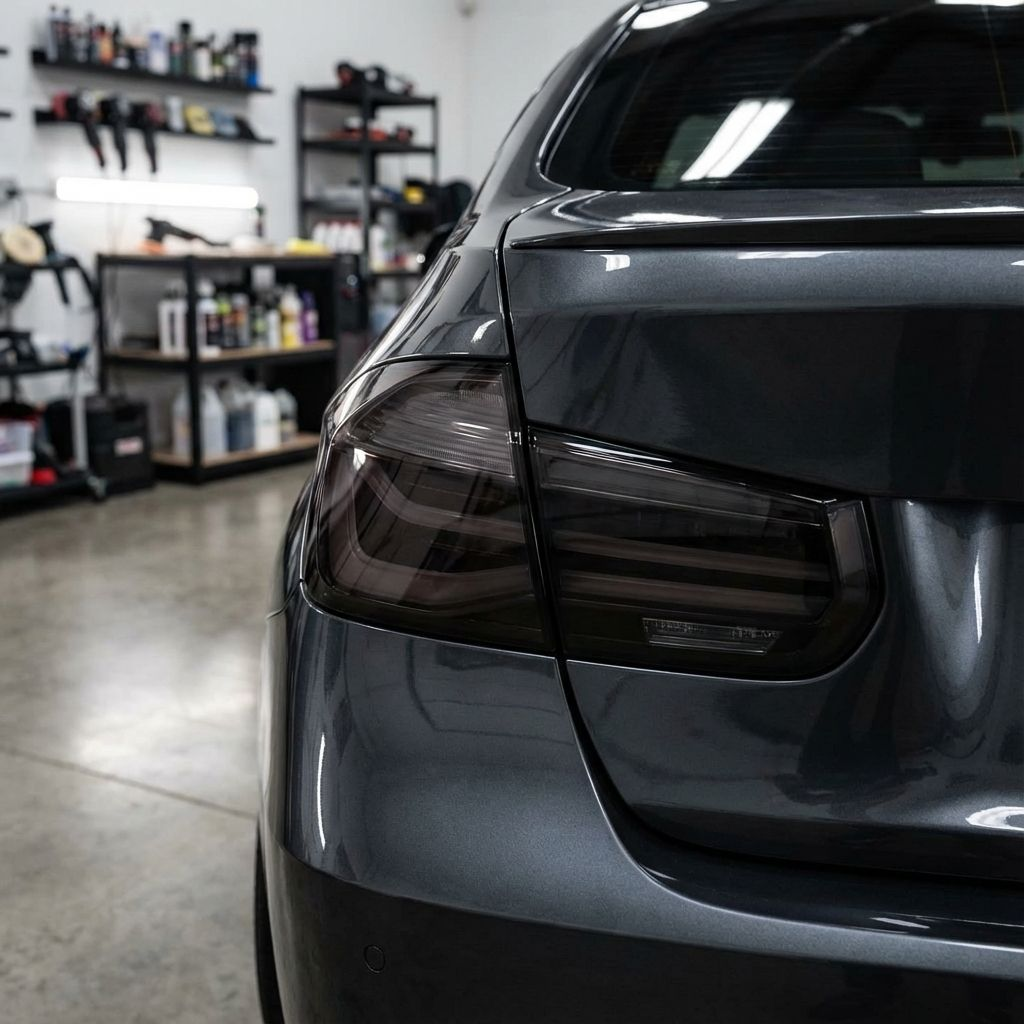
Compare taillight tint darkness levels from light smoke to blackout. Understand visibility, legality, and which shade works best for your style and vehicle.
You want that murdered-out look. Blacked-out taillights, aggressive stance, the full treatment.
But here's the question we get every week: "How dark can I go?"
The answer isn't simple. It depends on your vehicle, your goals, your risk tolerance, and honestly—what actually looks good. Because the darkest option isn't always the best option.
Let's break down taillight tint darkness levels so you can make an informed choice.
Understanding Tint Darkness Levels
Taillight tints are categorized by how much light they block. Unlike window tint (measured by VLT—visible light transmitted), taillight tint is often described subjectively:
Light Smoke (5-15% Light Reduction)
Appearance: Subtle shading, clearly visible as slightly darker than stock.
Light visibility:
- Brake lights: Fully visible day and night
- Turn signals: Fully visible
- Running lights: Fully visible
Best for:
- Subtle enhancement
- HOA or inspection-sensitive situations
- Vehicles with already-dark factory lenses
- First-time tinters wanting minimal risk
Example effect: Takes aggressive red lenses down to a more sophisticated tone without any darkness concerns.
Medium Smoke (15-30% Light Reduction)
Appearance: Noticeably darker, defined look without being extreme.
Light visibility:
- Brake lights: Visible in all conditions
- Turn signals: Visible, may appear slightly dimmed
- Running lights: Visible but reduced
Best for:
- Most daily drivers
- Vehicles with chrome-trimmed lights (contrast looks great)
- Black, gray, or dark-colored vehicles
- Balanced aesthetics and safety
Example effect: The "just right" level for most builds. Obvious enhancement, but lights clearly work.
Dark Smoke (30-50% Light Reduction)
Appearance: Significantly darker, noticeable reduction even from a distance.
Light visibility:
- Brake lights: Visible but reduced, especially in bright daylight
- Turn signals: Reduced visibility
- Running lights: Significantly dimmed
Best for:
- Show vehicles
- Track/drag cars (not street-driven primarily)
- Owners accepting increased risk
- Vehicles with high-output LED taillights
Important: At this level, upgrade to high-output bulbs if possible.
Blackout (50%+ Light Reduction)
Appearance: Nearly opaque when lights are off, minimal visibility when on.
Light visibility:
- Brake lights: Visible but concerning in bright daylight
- Turn signals: Difficult to see in some conditions
- Running lights: Barely visible
Best for:
- Show-only vehicles
- Photography/film vehicles
- Non-street-driven builds
- Owners who fully understand the risks
Reality check: Full blackout taillights are genuinely dangerous for daily driving. Following vehicles may not see you brake in time.
Visual Comparison
Here's what to expect at each level:
| Darkness Level | Lights Off Appearance | Brake Light Visibility | Daily Driver Safe? |
|---|---|---|---|
| Light smoke | Slight gray tint | 100% | Yes |
| Medium smoke | Noticeable gray | 85-90% | Yes |
| Dark smoke | Dark gray | 60-70% | Borderline |
| Blackout | Nearly black | 30-50% | No |
What Actually Looks Good?
Here's what we've learned from thousands of installations:
The Sweet Spot: Medium Smoke
Most customers who request "dark" or "blackout" are actually happiest with medium smoke. Here's why:
Reason 1: Contrast creates the effect The visual impact of tinted taillights comes from contrast—the difference between the tint and surrounding bodywork. Medium smoke on a black car creates dramatic contrast. Going darker often doesn't add visual impact; it just makes lights less visible.
Reason 2: Details disappear Modern taillights have intricate designs—LED patterns, chrome accents, multi-layer lenses. Heavy tint obscures these details, making expensive lights look like flat black panels.
Reason 3: Color matters On lighter vehicles (white, silver, light grays), even light smoke creates strong visual impact. Going dark on a white car often looks mismatched.
Vehicle-Specific Recommendations
Based on factory light output and design:
Light smoke recommended:
- Older incandescent taillights (lower output)
- Already-dark factory smoked lenses
- Vehicles with complex LED patterns
- White, silver, or light-colored vehicles
Medium smoke recommended:
- Standard LED taillights
- Chrome-surrounded lenses
- Black, gray, charcoal vehicles
- Most modern sedans and SUVs
Dark smoke only if:
- High-output aftermarket LEDs installed
- Show vehicle, limited street driving
- Track/drag builds
- You fully understand visibility reduction
Blackout: Almost never for street vehicles
The Safety Reality
Let's be direct about safety:
Brake Light Purpose
Brake lights exist for one reason: to tell following drivers you're slowing down. Every percentage of light reduction increases the risk that a following driver won't react in time.
Reaction time matters:
- Seeing brake lights clearly: 0.5 second reaction
- Seeing dimmed lights: 0.8-1.2 second reaction
- Not seeing until close: 1.5+ second reaction
At 60mph, that extra reaction time = 30-60 extra feet before braking.
Real-World Scenarios
Where heavy tint is problematic:
- Bright daylight (red lights compete with sun-washed surroundings)
- Following distance (light intensity drops with distance)
- Dirty/wet conditions (light scatter)
- Behind trucks or SUVs (drivers watching from higher position)
Where tint is less critical:
- Night driving (any red glow is visible against darkness)
- Low-speed city driving (shorter stopping distances)
- Clear conditions (maximum visibility)
Our Policy
We install all tint levels customers request, but we:
- Explain visibility reduction honestly
- Recommend appropriate levels for daily drivers
- Suggest LED upgrades for darker installations
- Document customer acknowledgment for dark/blackout
We want you happy with your build—and we want you safe.
California Law: What's Actually Legal?
California Vehicle Code requires:
- Taillights visible from 1,000 feet
- Brake lights visible from 300 feet in normal sunlight
- Red light visible from rear
The interpretation: No specific percentage is banned, but lights must function as required. Officers have discretion.
Reality:
- Light smoke: Never an issue
- Medium smoke: Rarely an issue if lights work
- Dark smoke: May attract attention, depends on officer
- Blackout: Likely to be cited if noticed
Fix-It Tickets
Most taillight tint citations are "fix-it tickets"—remove the tint, get sign-off, case closed. But you'll have paid for tint you can no longer use.
Smarter approach: Start with medium smoke. Live with it. If you want darker, you have that option later.
Material Options at Each Level
Taillight tint comes in different formats:
Spray Tint
Available darkness: All levels, easily adjustable Pros: Cheap, DIY-friendly, easily removed Cons: Can look uneven, doesn't last, may peel
Best for: Temporary looks, testing darkness preference
Vinyl Film
Available darkness: Light to dark smoke Pros: Durable, removable, consistent finish Cons: Requires skill to apply on curves, may lift edges
Best for: Most installations, best balance of quality and removability
Smoked Lens Covers
Available darkness: Light to dark smoke (fixed shade) Pros: Snap-on installation, easily removable Cons: Adds bulk, visible gap at edges, limited fitment
Best for: Trucks with flat taillight designs
Tinted Clear Coat
Available darkness: Light smoke only Pros: Permanent protection, OEM look Cons: Difficult to remove, limited darkness options
Best for: Factory-look enhancement only
Our Preference: Professional Vinyl Film
We use premium vinyl film (VViViD, Luxe, 3M) for most installations:
- Consistent color and darkness
- Follows complex curves
- Fully removable for resale or ticket
- 5-7 year durability
- No damage to factory lights
Matching Your Vehicle's Look
The Complete Blackout Build
If you're doing full blackout treatment:
- Window tint (usually 15-20%)
- Chrome delete
- Blacked-out badges
- Powder-coated wheels
Taillight recommendation: Medium smoke to maintain the look without visibility issues.
Subtle Enhancements
If you want refined, not aggressive:
- Light smoke taillights
- Lightly tinted side markers
- Maybe headlight tint (lighter shade)
Effect: Factory-plus appearance, completely daily-driver safe.
Track/Show Car
For vehicles that spend minimal time on public roads:
- Go as dark as you want
- LED upgrades to compensate
- Understand it's not street-legal in most interpretations
How to Choose: Decision Framework
Answer these questions:
1. Is this your daily driver?
- Yes → Light to medium smoke maximum
- No → Your choice
2. What color is your vehicle?
- Light colors → Light smoke creates sufficient contrast
- Dark colors → Medium smoke balances look and function
3. What's your tolerance for attention from law enforcement?
- Low tolerance → Stay at light smoke
- Moderate → Medium smoke is typically fine
- High tolerance → Your choice, understand risks
4. Are you keeping the car long-term?
- Yes → Professional installation, premium materials
- No → Consider that dark tint may hurt resale
5. What do your local shops recommend?
- If every shop advises against blackout, listen
Our Recommendation
For 90% of our customers, here's the honest advice:
Medium smoke with quality film, professionally installed.
It delivers:
- Noticeable visual upgrade
- Safe light output for daily driving
- No officer attention
- Easy removal for sale or inspection
- Years of durability
You can always go darker later if you feel you need it. You can't un-tint if you're in an accident because someone didn't see your brake lights.
Ready to Tint Your Taillights?
We'll walk you through the options, show you samples at each darkness level, and recommend what works best for your specific vehicle and goals.
📞 Request a taillight tint quote — we'll discuss options for your specific vehicle.
📍 Visit our Gilroy shop — see tint samples on actual lenses before deciding. View our taillight tinting services →
Visit the Experts in Gilroy
Blackout Window Tinting is the Bay Area's premier choice for premium auto protection. Based in Gilroy at 610 Holloway Rd (behind Target), we've served the South County and Silicon Valley area for over 30 years. Whether you're coming from Morgan Hill, Hollister, or anywhere else in the Bay Area, we're your trusted local source for professional window tint, PPF, and ceramic coating.
📞 Questions? Call us at 408-848-8468 or get a free quote online.
Related Articles
31+ years
The team at Blackout Window Tinting has been serving the Bay Area since 1993, providing premium window tinting and vehicle protection services.
Window TintingPPFCeramic CoatingVehicle Wraps