Window Tinting
Ceramic Tint vs Dyed Tint 2026: Which is Better?

Blackout Team· Window Tinting Experts
·7 min read
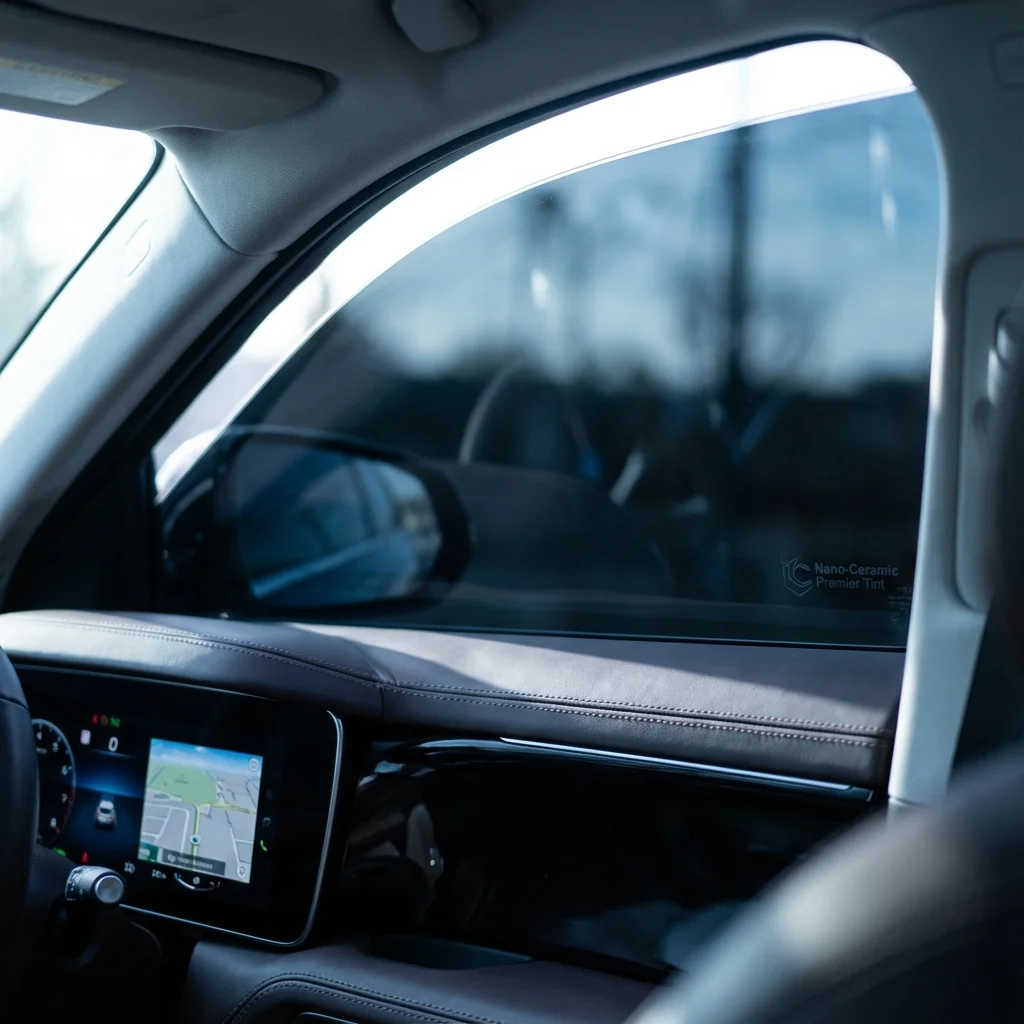
Ceramic tint vs dyed tint comparison: heat rejection, longevity, cost. Is ceramic worth 2x the price? Complete comparison with honest pros/cons.
Choosing between ceramic and dyed window tint is one of the most common decisions for car owners. Ceramic costs 2-3x more—is it worth it? This guide gives you the honest answer.
At Blackout Window Tinting, we install both types daily. Here's what you need to know.
Ceramic vs Dyed Tint: Quick Comparison
| Feature | Ceramic Tint | Dyed Tint |
|---|---|---|
| Heat Rejection | 50-60% TSER | 25-35% TSER |
| Infrared Rejection | 80-97% | 5-15% |
| UV Rejection | 99% | 99% |
| Signal Interference | None | None |
| Lifespan | 10+ years | 5-8 years |
| Fade Resistance | Excellent | May turn purple |
| Cost (Sedan) | $350-$550 | $150-$250 |
Bottom line: Ceramic costs more but provides significantly better heat rejection and lasts longer.
What is Dyed Window Tint?
Dyed tint is the original window tinting technology:
- Dye layer between adhesive and protective coating
- Absorbs sunlight rather than reflecting it
- Blocks light for privacy and aesthetics
- Budget-friendly entry point to window tinting
How Dyed Tint Works
Dyed film absorbs solar energy into the dye layer. This provides:
- Privacy (dark appearance)
- UV protection
- Some heat reduction (by absorption)
- Glare reduction
Dyed Tint Limitations
The absorbed heat has to go somewhere—it transfers into the glass and eventually your interior. This is why dyed tint's heat rejection numbers are lower.
What is Ceramic Window Tint?
Ceramic tint uses advanced nano-ceramic technology:
- Ceramic particles infused throughout the film
- Reflects and blocks infrared heat (not just absorbs)
- Non-metallic so no signal interference
- Color-stable won't fade or turn purple
How Ceramic Tint Works
Ceramic particles reflect infrared heat away from your vehicle while allowing visible light through. This provides:
- Excellent heat rejection (up to 60% TSER)
- Near-complete infrared blocking (80-97%)
- No metallic sheen or signal issues
- Long-term color stability
Heat Rejection: The Real Difference
This is where ceramic justifies its premium:
| Metric | Dyed Tint | Ceramic Tint |
|---|---|---|
| Total Solar Energy Rejected | 25-35% | 50-60% |
| Infrared (Heat) Rejection | 5-15% | 80-97% |
| Interior temp reduction | 5-10°F | 15-20°F |
| AC strain reduction | Minor | Significant |
Real-World Impact
In a summer parking lot:
| Scenario | Dyed Tint | Ceramic Tint |
|---|---|---|
| Interior temp after 30 min | 130-140°F | 115-125°F |
| Steering wheel touchable | No | Possibly |
| Cool-down time with AC | 8-12 min | 4-7 min |
Ceramic provides 2-3x better heat reduction.
Longevity Comparison
| Factor | Dyed Tint | Ceramic Tint |
|---|---|---|
| Expected lifespan | 5-8 years | 10-15+ years |
| Fade resistance | May turn purple | No fading |
| Bubble risk | Higher over time | Very low |
| Warranty | 3-5 years typical | Lifetime typical |
Dyed tint's biggest weakness: the dye can break down over years, causing purple discoloration—especially on rear windows with defrosters.
Cost Comparison
Initial Cost
| Vehicle Type | Dyed Tint | Ceramic Tint |
|---|---|---|
| Sedan | $150-$250 | $350-$550 |
| SUV | $200-$300 | $450-$650 |
| Truck | $175-$275 | $400-$600 |
| Tesla 3/Y | $200-$275 | $450-$600 |
Cost Per Year (Lifespan Adjusted)
| Tint Type | Cost | Lifespan | Cost Per Year |
|---|---|---|---|
| Dyed | $200 | 6 years | $33/year |
| Ceramic | $450 | 12 years | $38/year |
When factoring lifespan, ceramic is only ~$5/year more—with dramatically better performance.
When to Choose Dyed Tint
✅ Budget is very tight – Lowest upfront cost
✅ Aesthetics only – You mainly want darker appearance
✅ Selling car soon – 1-2 year ownership
✅ Mild climate – Heat rejection less critical
✅ Garage parking – Less sun exposure
When to Choose Ceramic Tint
✅ Heat rejection matters – Hot climate or black interior
✅ Long-term ownership – 3+ years planned
✅ Quality investment – Better performance, longer life
✅ Daily driver – Regular sun exposure
✅ Tesla or glass-heavy vehicle – Large glass area
✅ No fading concerns – Purple tint is a dealbreaker
What About Carbon Tint?
Carbon tint sits between dyed and ceramic:
| Feature | Dyed | Carbon | Ceramic |
|---|---|---|---|
| Heat rejection | 25-35% | 35-45% | 50-60% |
| IR rejection | 5-15% | 40-50% | 80-97% |
| Fade resistance | Fair | Good | Excellent |
| Cost | $ | $$ | $$$ |
Carbon is a good mid-tier option if ceramic is out of budget but you want better-than-dyed performance.
Brand Recommendations
Best Dyed Tint
- 3M Color Stable (won't turn purple)
- SunTek Standard
Best Ceramic Tint
- LLumar IRX (best heat rejection)
- 3M Crystalline (best clarity)
- 3M Ceramic IR (best value ceramic)
Read our LLumar IRX review →
Read our 3M Ceramic IR review →
Frequently Asked Questions
Is ceramic tint worth the extra money?
For most drivers, yes. The 2-3x better heat rejection, longer lifespan, and no fading makes the 2x higher cost worthwhile—especially if you live in a warm climate or plan long-term ownership.
Will dyed tint turn purple?
Low-quality dyed tint may turn purple after 3-5 years due to dye breakdown. Quality dyed films like 3M Color Stable are designed to resist this. Ceramic tint never turns purple.
Does ceramic tint look different than dyed?
Slightly. Ceramic tint may appear slightly less "black" at the same VLT percentage, but difference is subtle. Both look great when properly installed.
Is carbon tint as good as ceramic?
No. Carbon is better than dyed but doesn't match ceramic's heat rejection (40-50% IR vs 80-97% IR). Carbon is a good budget upgrade from dyed.
Can I upgrade from dyed to ceramic later?
Yes—remove the old tint and install ceramic. However, you'll pay for removal + new installation. Better to invest in ceramic upfront if budget allows.
Does ceramic tint affect radio signals?
No. Ceramic is non-metallic, so it doesn't interfere with GPS, phone, Bluetooth, or radio signals. This is a major advantage over metallic tints.
Our Recommendation
| Situation | Recommendation |
|---|---|
| Tight budget | Quality dyed (3M Color Stable) |
| Best value | Carbon hybrid |
| Hot climate | Ceramic (LLumar IRX) |
| Maximum performance | Ceramic (3M Crystalline) |
| Long-term ownership | Ceramic always |
For Bay Area drivers, we recommend ceramic. The heat rejection is noticeable and the lifetime warranty makes it the better long-term investment.
Get Window Tint Installed
Ready for quality tint? At Blackout Window Tinting, we offer:
- All tint types – Dyed, carbon, ceramic
- Premium brands – LLumar, 3M, SunTek
- Free consultations – We'll recommend the right film
- 30+ years experience – Since 1993
📍 Location: 610 Holloway Rd, Gilroy (behind Target)
📞 Call: 408-848-8468
🎯 Get Your Free Quote →
Related Articles
31+ years
The team at Blackout Window Tinting has been serving the Bay Area since 1993, providing premium window tinting and vehicle protection services.
Window TintingPPFCeramic CoatingVehicle Wraps