Ceramic Coating
Ceramic Coating Maintenance Guide | Maximize Your Investment

Blackout Team· Window Tinting Experts
·12 min read
Wash ceramic-coated cars every 1-2 weeks with pH-neutral soap. Apply SiO2 booster every 2-3 months. Decontaminate every 6 months. Use two-bucket method and avoid automatic brush washes. Proper care extends 5-year coatings to 7+ years.
How to maintain ceramic coating. Washing, care, and maintenance tips to get the full lifespan from your ceramic coating.
Complete Ceramic Coating Maintenance Guide
Ceramic coating isn't set-and-forget. While it makes your car dramatically easier to clean, proper maintenance maximizes protection and ensures you get the full 2-7 year lifespan from your investment.
This guide covers everything you need to know about maintaining a ceramic-coated vehicle, from weekly washing routines to annual decontamination protocols.
The Maintenance Reality: What to Expect
What Ceramic Coating Does
A quality ceramic coating provides significant benefits:
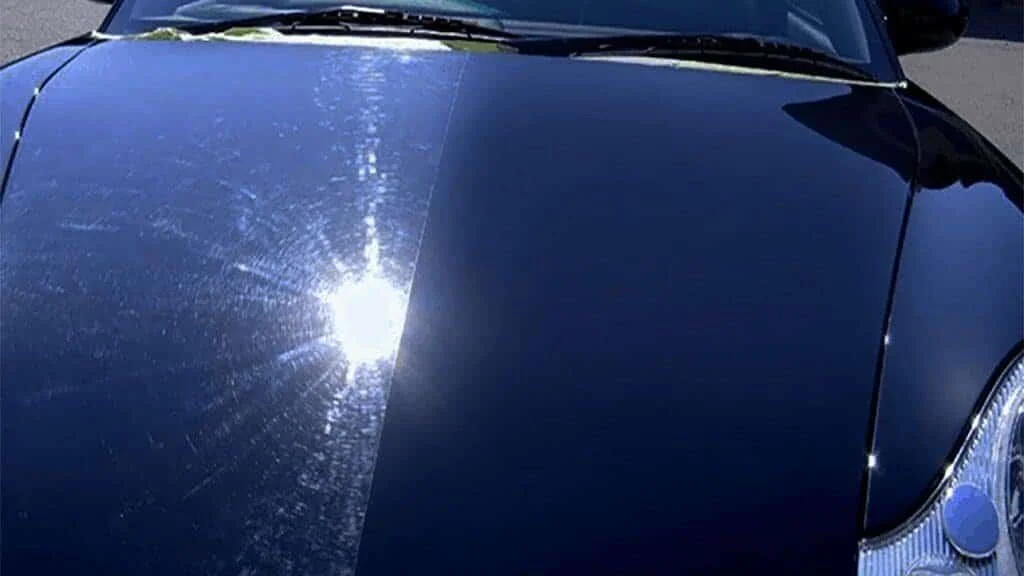
- Creates a protective layer — 9H hardness resists light scratches and swirl marks
- Makes cleaning dramatically easier — Contaminants don't bond strongly to the surface
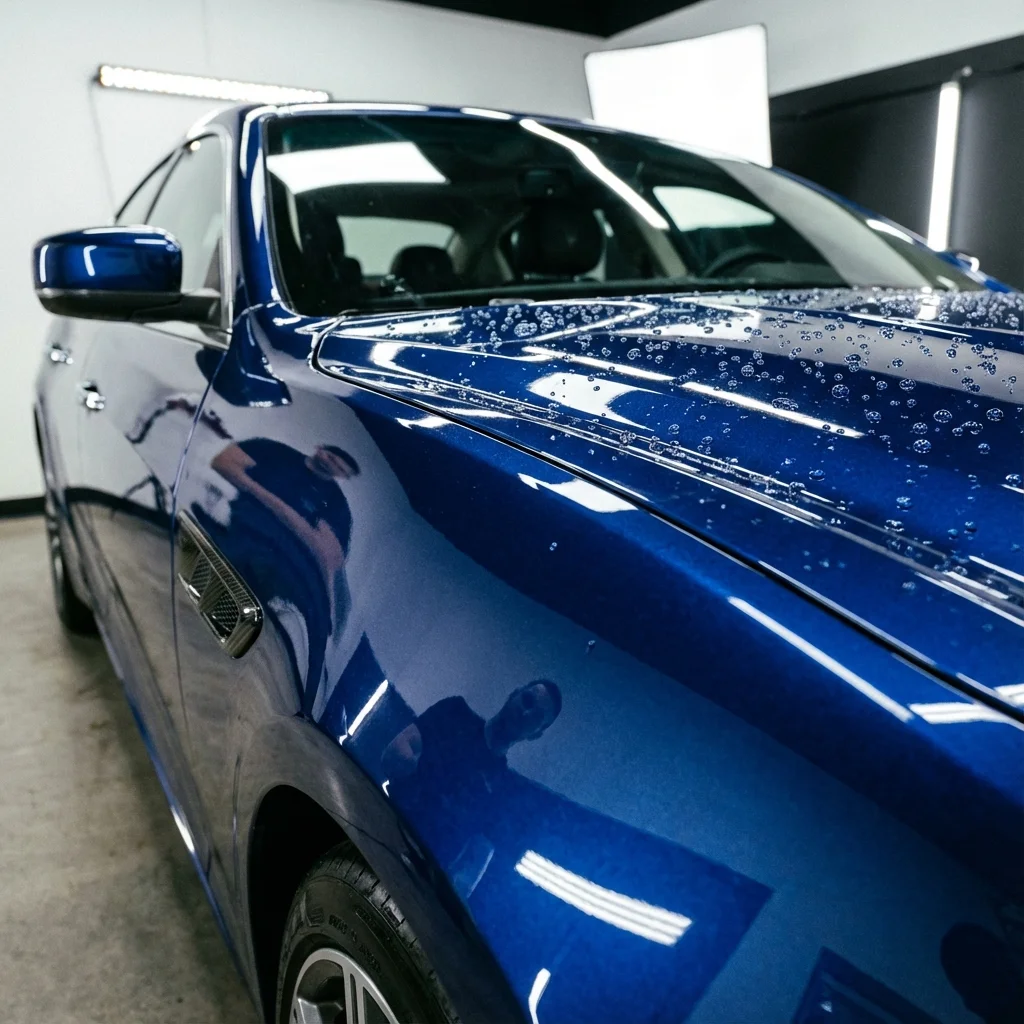
- Repels water and contaminants — Hydrophobic properties bead and sheet water
- Provides UV protection — Prevents paint oxidation and fading
- Enhances gloss — Creates a deep, wet-look shine
- Resists chemical staining — Bird droppings, tree sap, and bug splatter clean off easily
What Ceramic Coating Doesn't Do
Understanding limitations prevents disappointment:
- It doesn't self-clean entirely — You still need to wash your car
- It doesn't prevent all scratches — Deep scratches and key scratches still damage paint
- It doesn't last forever without care — Neglected coatings degrade faster
- It doesn't replace regular washing — Dirt still accumulates, releases easier
- It doesn't prevent rock chips — That's what PPF is for
- It doesn't eliminate water spots — Hard water still leaves mineral deposits
Washing Coated Vehicles: Step-by-Step
The Proper Wash Process
Follow this process for the best results:
1. Pre-Rinse (2-3 minutes)
- Thoroughly spray the entire vehicle with water
- Focus on wheel wells, rockers, and lower panels
- Goal: Remove loose dirt before touching paint
2. Pre-Wash with Foam Cannon (5-7 minutes)
- Apply thick foam using a foam cannon
- Let dwell for 3-5 minutes (don't let dry!)
- Foam lifts and encapsulates dirt particles
- Rinse thoroughly before contact wash
3. Two-Bucket Contact Wash (10-15 minutes)
- Bucket 1: Clean soap solution
- Bucket 2: Plain rinse water with grit guard
- Use soft microfiber wash mitt
- Work in sections from top to bottom
- Rinse mitt in rinse bucket between sections
4. Final Rinse (3-5 minutes)
- Thorough rinse from top to bottom
- Pay attention to seams, emblems, mirrors
- Filtered/deionized water prevents water spots
5. Drying (5-10 minutes)
- Pat dry with high-quality microfiber drying towel
- OR use forced air blower (Metro Vac, CTEK Typhoon)
- Air drying prevents swirl marks from toweling
Wash Frequency Recommendations
| Usage Pattern | Recommended Frequency | Why |
|---|---|---|
| Daily commuter (highway) | Weekly | Highway debris, brake dust accumulation |
| Daily commuter (city) | Every 10-14 days | Less debris, more urban contamination |
| Weekend car | Before and after each use | Maintain show-car appearance |
| Garage queen | Monthly minimum | Dust still accumulates, needs maintenance |
| Parked under trees | Weekly or more | Bird droppings and sap damage coating |
Products to Use (And Avoid)
DO Use:
- pH-neutral car shampoo (Optimum No Rinse, CarPro Reset)
- Ceramic coating-safe detailers (Gyeon Cure, CarPro Reload)
- Plush microfiber wash mitts (minimum 500 GSM)
- Microfiber drying towels (minimum 400 GSM)
- Filtered or deionized water for final rinse
DO NOT Use:
- Dish soap (strips coating accelerants)
- All-purpose cleaners at full strength
- Abrasive sponges or brushes
- Automatic brush car washes (will damage coating)
- Wax (incompatible with ceramic, creates issues)
- Cheap, scratchy towels
Boosting Your Coating: When and How
What Are Ceramic Boosters?
SiO2 (silicon dioxide) spray sealants that:
- Refresh hydrophobic properties — Restores water beading
- Add sacrificial protective layer — Takes abuse instead of coating
- Extend coating lifespan — Delays need for reapplication
- Enhance gloss and slickness — Deepens shine
- Fill micro-imperfections — Creates smoother surface
Recommended Boosters
| Product | Best For | Application |
|---|---|---|
| Gyeon Cure | All-around maintenance | Spray and wipe after wash |
| CarPro Reload | High-gloss enhancement | Spray on wet surface, rinse |
| Gtechniq Crystal Serum Light | Long-lasting boost | Spray and buff when dry |
| IGL Ecoclean Wash&Coat | Wash + boost combined | Use instead of shampoo |
When to Apply Boosters
| Coating Age | Boost Frequency | Why |
|---|---|---|
| 0-6 months | Optional (as needed) | Coating at peak performance |
| 6-12 months | Every 2-3 months | Hydrophobics beginning to diminish |
| 1-2 years | Monthly | Regular maintenance extends life |
| 2+ years | Every wash | Sacrificial layer compensates for wear |
Decontamination: The Deep Clean
Why Decontamination Is Essential
Over time, even coated vehicles accumulate:
- Iron particles — From brake dust, train tracks, road debris
- Industrial fallout — Metallic particles from factories
- Organic contaminants — Tree sap, bug splatter residue
- Mineral deposits — Hard water spots, road salt
- Tar and road film — Especially on lower panels
These contaminants embed in and on the coating, reducing performance and potentially damaging the underlying surface.
Decontamination Schedule
| Environment | Recommended Frequency |
|---|---|
| City/highway driving | Every 6 months |
| Rural/suburban | Annually |
| Near construction zones | Quarterly |
| Coastal/salt exposure | Every 3-4 months |
| Parked near railroad | Every 3-4 months |
The Decontamination Process
Step 1: Thorough Wash
- Complete the full wash process first
- Ensure surface is clean of loose dirt
Step 2: Iron Remover
- Spray iron remover (CarPro Iron X, Gyeon Iron)
- Let dwell until purple (chemical reaction with iron)
- Rinse thoroughly
- Repeat if necessary
Step 3: Chemical Decontamination
- Apply tar remover to affected areas (lower panels, wheel wells)
- Wipe with microfiber
- Rinse clean
Step 4: Mechanical Decontamination (if needed)
- Use fine grade clay bar or clay mitt with lubricant
- Work small sections at a time
- Feel for remaining contaminants
- Synthetic clay preferred (won't damage coating)
Step 5: Final Wash and Boost
- Complete rinse and wash
- Apply SiO2 booster while surface is wet
- Dry as normal
Signs Your Coating Needs Attention
Normal Wear (Maintenance Needed)
These signs indicate it's time for a boost or decontamination:
- Reduced water beading — Water droplets flatter, not tight beads
- Slower water sheeting — Water takes longer to slide off
- More visible water spots — Minerals stick more easily
- Surface feels slightly less slick — More friction when running hand across
Time to Consider Re-Coating
These signs indicate the coating is at end of life:
- No hydrophobic behavior — Water spreads flat instead of beading
- Paint feels rough after wash — Contaminants embedding in bare paint
- Cleaning is difficult again — Back to pre-coating effort levels
- Visible coating failure — Peeling, high-spot marks, inconsistent appearance
- 3-5+ years since application — Depends on coating quality and care
Frequently Asked Questions
How often should I wash a ceramic-coated car?
Every 1-2 weeks for daily drivers. Ceramic coating makes washing easier and faster, but you still need to wash. The coating prevents contaminants from bonding strongly, but they still accumulate on the surface.
Can I use a pressure washer on ceramic coating?
Yes! Pressure washers are ideal for ceramic-coated vehicles. Use a wide fan tip (40°), hold 12+ inches from the surface, and avoid focusing on one spot too long. The pressure helps remove contaminants without contact.
Will automatic car washes damage my ceramic coating?
Touchless automatic washes: Generally safe. The strong chemicals may slightly accelerate coating wear, but won't damage it.
Brush-style automatic washes: AVOID. The brushes are abrasive and will scratch the coating and paint, defeating the purpose of protection.
How long does ceramic coating last with proper maintenance?
| Coating Grade | Expected Lifespan |
|---|---|
| Consumer/DIY | 1-2 years |
| Professional (3-year) | 3-4 years |
| Professional (5-year) | 5-7 years |
| Professional (lifetime) | 7-10+ years with annual maintenance |
Proper maintenance can extend these lifespans significantly. Poor maintenance can cut them in half.
Can I wax over ceramic coating?
Don't. Carnauba wax is chemically incompatible with ceramic coatings. It creates a film that affects hydrophobics and doesn't bond properly. Use SiO2 spray sealants (boosters) instead—they're designed to work with ceramic coatings.
What happens if bird droppings sit on my ceramic coating?
Ceramic coating gives you MORE time, not infinite time. Fresh bird droppings should still be removed within 24-48 hours to prevent etching. Without coating, etching can occur within hours in hot sun.
Should I get annual maintenance at a professional shop?
Highly recommended. Professional detailing services include:
- Complete decontamination
- Coating inspection
- Professional-grade booster application
- Paint correction for any minor defects
This ensures your coating performs optimally year after year.
Ready for Coating Maintenance?
We offer comprehensive maintenance packages:
📞 Call 408-848-8468 — Schedule decontamination service
📝 Get a free quote — Maintenance packages for coated vehicles
🔧 Learn about our coating services
Serving Gilroy, Morgan Hill, San Jose and the Bay Area. Call Blackout Window Tinting at (408) 848-8468 for a free estimate.
33+ years
The team at Blackout Window Tinting has been serving the Bay Area since 1993, providing premium window tinting and vehicle protection services.
Window TintingPPFCeramic CoatingVehicle Wraps