Window Tinting
California Title 24 Window Film Guide 2026 | Commercial Energy Compliance

Blackout Team· Window Tinting Experts
·9 min read
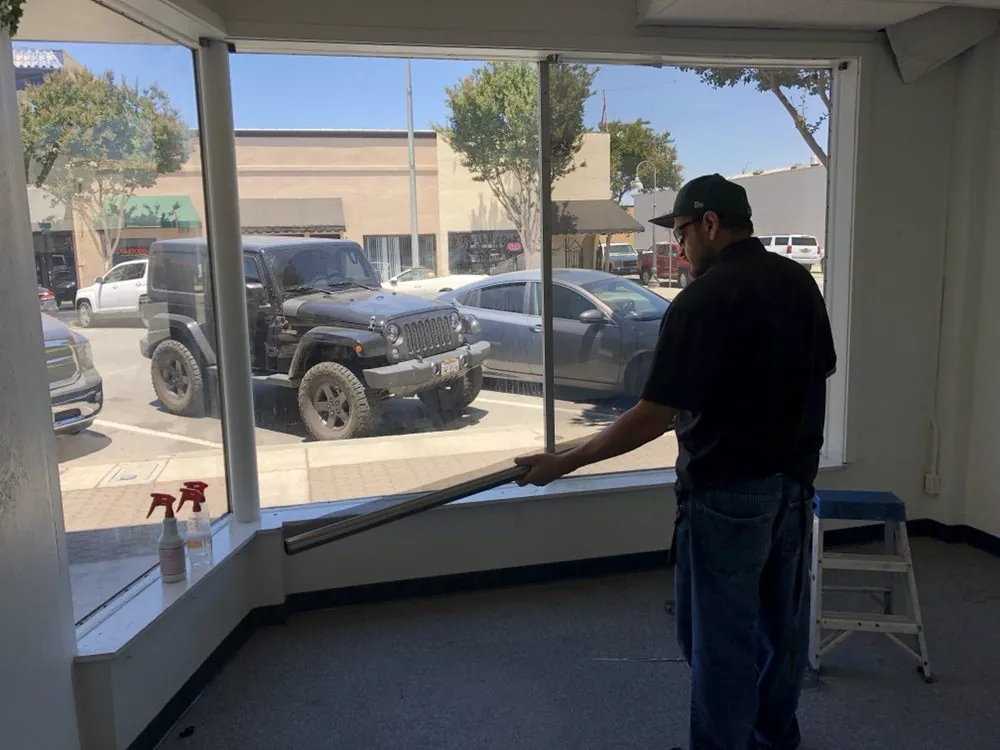
Complete guide to Title 24 window film requirements for California commercial buildings. NFRC ratings, compliance strategies, and how window film helps meet energy codes.
California's Title 24 building energy rules are the strictest in the nation. For commercial property owners and managers, knowing how window film fits into compliance can save money on both installation and energy bills.
This guide covers Title 24 window requirements, explains how window film helps, and gives practical tips for commercial projects.
What Is California Title 24?
Overview
Title 24 refers to Part 6 of the California Code of Regulations—specifically the Building Energy Efficiency Standards. Updated every three years, these standards mandate minimum energy efficiency requirements for:
- New construction
- Alterations to existing buildings
- Additions
The 2025 code cycle (effective January 1, 2026) continues California's push toward net-zero energy buildings.
Why Title 24 Matters for Windows
Windows are one of the largest sources of energy gain and loss in buildings. A typical commercial building loses or gains 25-30% of its heating and cooling energy through fenestration (windows, doors, skylights). Learn more about commercial window tinting benefits.
Title 24 addresses this by regulating:
- U-Factor - How much heat transfers through the window
- SHGC - Solar Heat Gain Coefficient (how much solar heat enters)
- VT - Visible Transmittance (how much light enters)
Who Must Comply
Title 24 applies to:
- New buildings - All commercial construction
- Renovations - When altering more than 10% of lighting, HVAC, or envelope
- Tenant improvements - Often triggered by new occupancy
- Change of use - Different building types have different requirements
If you're doing work that requires a permit, Title 24 compliance is likely part of the review.
Title 24 Window Performance Requirements
2025 Code Requirements (Current)
For commercial buildings, prescriptive requirements vary by climate zone (California has 16 climate zones):
| Climate Zone | Max U-Factor | Max SHGC | Min VT |
|---|---|---|---|
| 1 (Arcata) | 0.36 | 0.25 | 0.10 |
| 3 (Oakland) | 0.36 | 0.25 | 0.10 |
| 6 (Los Angeles) | 0.36 | 0.22 | 0.10 |
| 12 (Sacramento) | 0.36 | 0.22 | 0.10 |
| 15 (Palm Springs) | 0.36 | 0.19 | 0.10 |
Climate Zone 4 (Gilroy area) typically requires:
- U-Factor ≤ 0.36
- SHGC ≤ 0.22-0.25
- VT ≥ 0.10
Understanding These Numbers
U-Factor: Measures heat transfer through the window. Lower is better. A U-Factor of 0.36 means some heat transfer is allowed, but the window must provide reasonable insulation.
SHGC: Measures solar heat gain. In California's sunny climate, we want low SHGC (less heat entering). 0.22 means only 22% of solar energy passes through.
VT (Visible Transmittance): Measures light transmission. Higher means more natural light. The minimum of 0.10 ensures windows still function as windows.
How Window Film Affects These Values
Window film applied to existing glass modifies performance:
U-Factor: Minimal change (film adds slight insulation value)
SHGC: Can be reduced significantly (30-70% reduction possible)
VT: Reduced in proportion to film darkness
This makes window film very effective for SHGC compliance—the most common challenge in California's sunny climate.
NFRC Certification Requirements
What Is NFRC?
The National Fenestration Rating Council (NFRC) provides standardized performance ratings for windows and window films. Title 24 requires NFRC-certified values for:
- New fenestration products
- Replacement windows
- Window film retrofits (when claiming energy credit)
Window Film Certification
For window film to receive Title 24 credit, the combined glass + film system must be NFRC-certified. This means:
- The window film itself must be NFRC-certified
- Performance values for the specific glass/film combination must be documented
- Installation must be performed by qualified installer
Major window film manufacturers (3M, LLumar, SunTek) provide NFRC certification data for their commercial products.
How Window Film Helps Achieve Compliance
Retrofit Strategy
For existing buildings where window replacement is cost-prohibitive, window film offers a path to compliance:
Scenario: An office building was constructed in 2005 with windows that don't meet current SHGC requirements.
Solution: Apply solar control window film to reduce SHGC from 0.40 to 0.22, achieving compliance without replacing windows.
Cost comparison:
- Window replacement: $80-$120+ per sq ft
- Window film retrofit: $8-$15 per sq ft
The film solution typically costs 10-15% of window replacement while achieving the same energy performance improvement.
New Construction Strategy
For new construction, specifying window film as part of the glazing system can allow:
- Larger window areas than would otherwise be permitted
- Clearer glass aesthetics (less need for dark-tinted glass)
- Cost savings compared to high-performance IGUs
Architects increasingly specify window film to achieve design goals within code limits.
Performance Compliance Path
Title 24 offers multiple compliance paths:
- Prescriptive - Meet or exceed specific component requirements
- Performance - Demonstrate overall building performance meets standards
Window film can help with both paths:
- Prescriptive: Achieve required SHGC values
- Performance: Contribute to overall envelope efficiency
Commercial Window Film Options
Solar Control Films
Primary films for Title 24 compliance:
| Film Type | SHGC Reduction | VT Impact | Best For |
|---|---|---|---|
| Silver Reflective | 60-75% | High reduction | Maximum heat control, not view-critical |
| Dual-Reflective | 50-65% | Moderate | Heat control + aesthetics |
| Neutral Ceramic | 40-55% | Lower reduction | Heat control + natural appearance |
| Spectrally Selective | 45-60% | Minimal | Maximum light + heat rejection |
Spectrally Selective Films
The gold standard for commercial applications. These films:
- Target infrared (heat) wavelengths specifically
- Allow maximum visible light transmission
- Provide SHGC reduction without creating a dark interior
- Maintain views for occupants
3M Prestige and LLumar Vista series are examples of spectrally selective commercial films.
Security Films Combined with Solar
Some projects require both security glazing and Title 24 compliance. Combined security/solar films can:
- Provide break-in resistance
- Reduce SHGC
- Meet multiple code requirements
This combination is popular for retail and ground-floor commercial spaces.
The Installation Process for Commercial Projects
Pre-Installation Requirements
- Energy modeling (if using performance path)
- Film specification with NFRC data
- Submittal package for building department review
- Scheduling to minimize tenant disruption
Installation Logistics
Commercial window film installation requires:
Access coordination:
- Lifts for high windows
- Interior access scheduling with tenants
- After-hours installation when needed
Quality control:
- Clean conditions (dust-free environment)
- Temperature requirements (film cures properly)
- Documentation of installed product
Timeline:
- Small retail: 1-2 days
- Office floor: 3-5 days
- Full commercial building: 2-4 weeks
Post-Installation Documentation
For Title 24 compliance, maintain:
- NFRC certification sheets
- Installation documentation
- Manufacturer warranty
- Product specifications
Building inspectors may request this documentation.
Cost Analysis: Window Film vs. Alternatives
Per-Square-Foot Comparison
| Solution | Cost per Sq Ft | Energy Savings | ROI Timeline |
|---|---|---|---|
| Window film | $8-$15 | 20-30% HVAC reduction | 2-4 years |
| Low-E IGU replacement | $80-$120 | 25-35% HVAC reduction | 15-25 years |
| Dynamic glass (electrochromic) | $150-$300 | 30-40% HVAC reduction | 20-30 years |
| Exterior shading | $40-$80 | 20-35% HVAC reduction | 8-15 years |
Simple ROI Calculation
For a 10,000 sq ft building with $3,000/month cooling costs:
- Film cost: ~$120,000
- Energy savings: ~$9,000/year (30% reduction)
- Payback: ~2.7 years
After payback, savings compound. Many buildings see $50,000+ savings over the film's 15-year lifespan.
Utility Rebates
Many California utilities offer rebates for commercial window film:
- PG&E: Rebates available through commercial programs
- SCE: Non-residential efficiency programs
- SDG&E: Commercial retrofit incentives
Rebates can offset 10-30% of installation cost.
Frequently Asked Questions
Is window film required for Title 24 compliance?
No, window film is not required—but it's often the most cost-effective path to compliance, especially for existing buildings. It's one of several options for meeting SHGC requirements.
Does window film void window warranties?
Most window manufacturers allow film with certain conditions (like reflectivity limits). Check your window warranty and use film products approved for dual-pane glass if applicable.
How long does commercial window film last?
Commercial-grade solar control films typically last 15-25 years with proper installation. Manufacturer warranties typically cover 10-15 years.
Can I install window film myself for Title 24 credit?
For Title 24 energy credit, professional installation with proper documentation is strongly recommended. DIY installation may not provide the documentation needed for permit approval or utility rebates.
What's the minimum NFRC rating needed?
There's no minimum NFRC rating—the requirement is that the combined glass + film system meets Title 24 prescriptive values for your climate zone, or contributes to building-wide performance compliance.
Do I need a permit for commercial window film?
For energy compliance projects, permits may be required depending on project scope and local jurisdiction. Check with your local building department.
Can window film help an older building meet current codes?
Yes, this is one of the most common uses. Window film can bring older buildings closer to current Title 24 standards without the expense of window replacement.
What about tenant disruption during installation?
We offer after-hours and weekend installation for minimal tenant impact. Most office installations can be scheduled outside business hours.
Working With Property Managers and Architects
For Property Managers
We provide:
- Energy analysis and ROI projections
- NFRC documentation packages
- Tenant communication templates
- Flexible scheduling options
- Multi-building pricing
For Architects and Developers
We offer:
- Performance specification assistance
- NFRC data for energy modeling
- Submittal packages for plan review
- Coordination with general contractors
Get Your Commercial Quote
Whether you're retrofitting an existing building or specifying film for new construction, Blackout Window Tinting provides:
- Free commercial assessments
- NFRC-certified product options
- Title 24 compliance guidance
- Utility rebate assistance
📞 Call us: (408) 848-8468 📍 Visit: 610 Holloway Road, Gilroy, CA 📧 Email: Commercial inquiries welcome
We've completed Title 24 compliance projects for offices, retail, and industrial buildings throughout the Bay Area. Let's discuss how window film can help your property meet California's energy standards at a fraction of window replacement cost.
33+ years
The team at Blackout Window Tinting has been serving the Bay Area since 1993, providing premium window tinting and vehicle protection services.
Window TintingPPFCeramic CoatingVehicle Wraps