Window Tinting
How Window Film Helps Buildings Meet California Title 24 Energy Code

Blackout Team· Window Tinting Experts
·8 min read
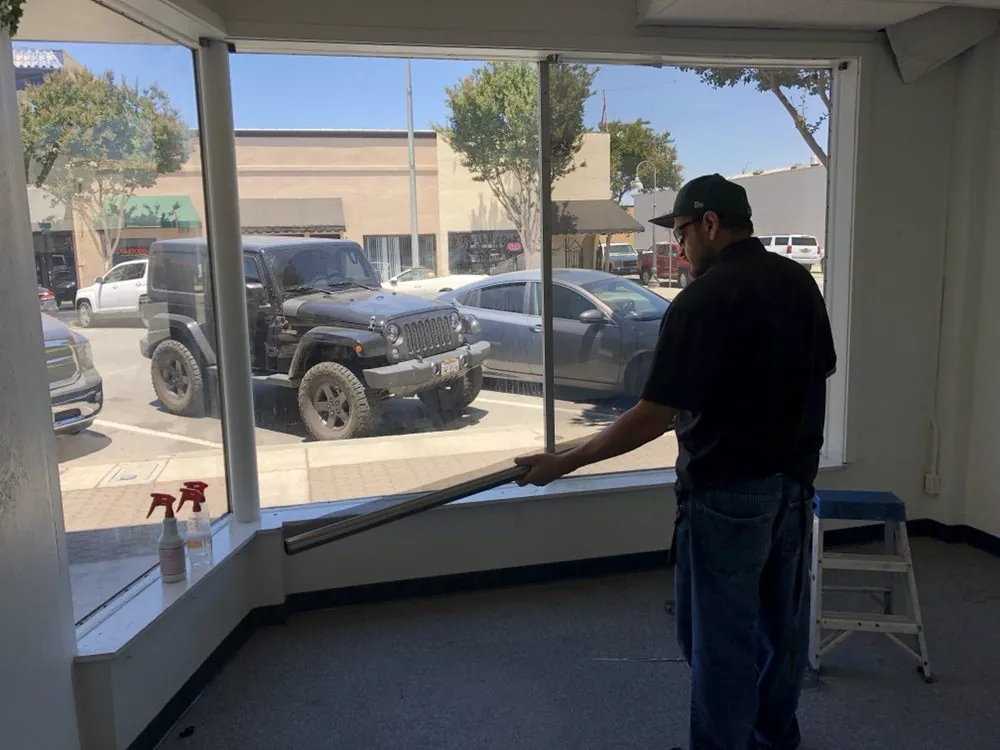
A technical guide for property managers and architects on using NFRC-certified window film to meet California's Title 24 energy efficiency requirements.
California's Title 24 Building Energy Efficiency Standards are among the strictest in the nation. For property managers, architects, and building owners, meeting these requirements can feel overwhelming—especially when existing windows don't comply.
The good news: Window film offers a cost-effective path to compliance without replacing your glazing.
Understanding Title 24 for Glazing
What Title 24 Requires
Title 24 sets maximum Solar Heat Gain Coefficient (SHGC) requirements for windows based on:
- Climate zone (California has 16 zones)
- Window orientation (west-facing has strictest requirements)
- Window-to-wall ratio
- Building type (residential vs. non-residential)
For most commercial buildings in the Bay Area (Climate Zones 3-4), prescriptive SHGC requirements typically range from 0.22 to 0.40 depending on orientation.
Breaking Down SHGC
SHGC stands for Solar Heat Gain Coefficient. It measures how much solar heat passes through a window:
- SHGC of 1.0 - All solar heat passes through (no blocking)
- SHGC of 0.5 - Half of solar heat passes through
- SHGC of 0.25 - Only 25% of solar heat passes through
Lower numbers mean less heat enters the building. Title 24 requires specific SHGC limits to reduce air conditioning load and save energy.
The Problem with Older Buildings
Many older buildings have windows with SHGC values of 0.50 or higher. When doing:
- Tenant improvements (TIs)
- Change of occupancy
- Major renovations
...the building department may require glazing upgrades to meet current code.
Window replacement costs a fortune. A single floor of an office building can run $100,000+ for new windows. Film offers a smarter solution.
How Window Film Achieves Compliance
SHGC Reduction
Window film reduces SHGC by adding a solar control layer to existing glass:
| Original Glass | + Film | New System SHGC |
|---|---|---|
| 0.60 SHGC | Dual-reflective | ~0.35 SHGC |
| 0.50 SHGC | Spectrally selective | ~0.28 SHGC |
| 0.45 SHGC | Solar control | ~0.22 SHGC |
Actual values depend on specific glass and film combinations. We calculate exact numbers for each project.
Why Film Works
Window film blocks solar energy in three ways:
- Reflection - Bounces energy away from the building
- Absorption - Captures energy in the film layer
- Transmission control - Limits what passes through
Modern spectrally selective films target infrared wavelengths specifically. This blocks heat without making windows dark.
NFRC Certification
The National Fenestration Rating Council (NFRC) certifies window film performance. For Title 24 compliance:
- Film must have NFRC-certified data
- Combined glass + film system must meet requirements
- Calculations must be documented for permit
We provide complete NFRC documentation for every commercial compliance project.
Compliance Pathways
Prescriptive Path
The simpler approach—meet specific SHGC values for each orientation:
- North: Often 0.40 or higher (easiest)
- East/West: Typically 0.25-0.35 (strictest)
- South: Usually 0.25-0.35
If your filmed windows meet these values, you comply. No complex calculations needed.
Performance Path
More flexible but requires energy modeling:
- Whole-building energy analysis
- Trade-offs between systems allowed
- May allow higher SHGC if compensated elsewhere
We provide data for both paths—your energy consultant can incorporate film performance into their models.
Which Path Is Right?
Most smaller projects use the prescriptive path. It's straightforward and predictable. Larger projects often use performance path for flexibility.
Your architect or energy consultant will recommend the best approach. We support either with proper documentation.
Case Example: Office Building Retrofit
Project: 50,000 sq ft office building in San Jose Challenge: TI for new tech tenant required Title 24 compliance Existing windows: 0.52 SHGC (non-compliant) Required: 0.35 SHGC for west-facing windows
The Problem
The building owner faced a choice: replace all west-facing windows or find another solution. Window replacement quotes came in at $180,000+ with 8-12 weeks of disruption. The new tenant needed to move in within 60 days.
Our Solution
- Installed 3M Prestige spectrally selective film
- Achieved 0.31 SHGC (exceeded requirement)
- Project completed in 3 days
- No tenant displacement required
- Building department approved the permit
Cost Comparison
| Option | Cost | Timeframe | Disruption |
|---|---|---|---|
| Window replacement | $180,000+ | 8-12 weeks | High |
| Window film | $22,000 | 3 days | Minimal |
Savings: 88% with film over replacement.
The tenant moved in on schedule. The building now exceeds Title 24 requirements. And the owner saved over $150,000.
Film Types for Title 24 Compliance
Spectrally Selective Films
The gold standard for commercial compliance. These films:
- Target infrared (heat) wavelengths specifically
- Allow maximum visible light transmission
- Provide SHGC reduction without darkness
- Maintain views for building occupants
3M Prestige and LLumar Vista series are examples of spectrally selective commercial films.
Dual-Reflective Films
Good balance of performance and cost:
- Higher heat rejection than spectrally selective
- Mirror-like exterior, lower reflection interior
- More affordable than premium films
- Excellent for parking garages and non-view-critical areas
Neutral Ceramic Films
When aesthetics matter most:
- No color shift or reflective appearance
- Modern, clean look
- Good heat rejection
- Maintains building design intent
Documentation We Provide
For every commercial Title 24 project, you receive:
1. NFRC Performance Data
- Certified SHGC values
- U-factor data
- VLT (Visible Light Transmittance)
2. System Calculations
- Glass + film combined performance
- Per-window analysis if needed
- Orientation mapping
3. Submittal Package
- Product specifications
- Installation details
- Warranty documentation
4. Post-Installation Certification
- Confirmation of installed products
- As-built documentation
- Inspection support
Building inspectors appreciate complete documentation. It speeds approvals and reduces questions.
Common Project Types
Tenant Improvements (TIs)
When new tenants move in, building departments often require Title 24 compliance updates. Window film lets you meet code without construction delays.
Change of Occupancy
Switching from warehouse to office? The new occupancy type may trigger stricter SHGC requirements. Film brings existing windows into compliance.
Major Renovations
Large renovation projects often require whole-building code updates. Window film handles the glazing portion at a fraction of replacement cost.
Historic Buildings
Old buildings with original windows can't always be replaced. Film preserves historic character while achieving modern energy standards.
Frequently Asked Questions
Does the building department accept window film for compliance?
Yes, when properly documented. The California Energy Commission accepts NFRC-certified window film as a valid compliance method. We provide the documentation needed for permit approval.
Can film work on any type of glass?
Most commercial glass types are compatible. We perform thermal stress analysis for each project to ensure safe installation, especially on dual-pane insulated glass.
What if my building has multiple glass types?
We analyze each window type and specify appropriate films to achieve compliance across the building. Different windows may need different films.
How long does installation take?
Most commercial projects complete in 1-5 days depending on size. We typically work after hours to minimize business disruption.
Is there ongoing maintenance required?
Minimal. Commercial window film requires normal cleaning with ammonia-free products. No special maintenance is needed.
What's the warranty on commercial film?
Commercial solar control films carry 10-15 year manufacturer warranties. This covers fading, bubbling, peeling, and delamination.
Will tenants notice the film?
Quality spectrally selective films are nearly invisible. Tenants notice cooler temperatures and reduced glare, not the film itself.
Can I finance the installation?
Many property owners include window film in TI budgets or capital improvement plans. Some utility rebates reduce upfront costs. Ask about payment options.
Utility Rebates
Many California utilities offer rebates for window film:
- PG&E: Commercial energy efficiency rebates
- SCE: Business incentive programs
- SDG&E: Commercial retrofit incentives
- Regional programs: Varies by location
Rebates can offset 10-30% of installation cost. We help identify available programs for your project.
Working with Your Team
For Property Managers
We coordinate with your tenants to schedule work with minimal disruption. After-hours installation is standard for occupied buildings.
For Architects
We provide specification data in the formats you need. NFRC performance values integrate directly into energy models.
For General Contractors
We work as a subcontractor on larger projects. Our team coordinates with your schedule and other trades.
For Energy Consultants
We provide detailed glass + film calculations for building energy analysis. Our documentation meets California Energy Commission requirements.
Start Your Compliance Project
Whether you're a property manager planning TI work, an architect specifying materials, or a building owner facing compliance requirements, we can help.
Free Assessment Includes:
- On-site glass analysis
- Climate zone verification
- Film recommendations
- Preliminary SHGC calculations
- Cost estimate
📞 Call: (408) 848-8468 📧 Email: Contact us for commercial projects 📍 Service Area: Bay Area, Central Coast, and South Bay
We've been helping commercial clients since 1993. Let's discuss your Title 24 compliance strategy.
33+ years
The team at Blackout Window Tinting has been serving the Bay Area since 1993, providing premium window tinting and vehicle protection services.
Window TintingPPFCeramic CoatingVehicle Wraps