Detailing
Black Car Paint Correction: Dark Color Guide

Blackout Team· Window Tinting Experts
·8 min read

Master black car paint care with our complete guide. Learn why dark colors show defects, professional correction techniques, and how to maintain a flawless
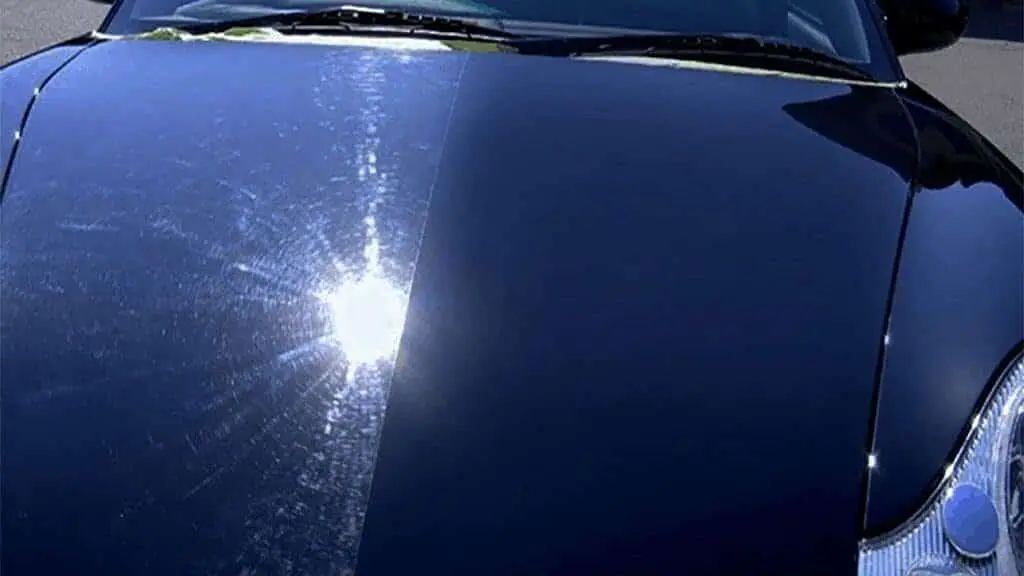
There's nothing quite like a freshly detailed black car. The depth, the reflections, the way it looks wet even when dry—black paint done right is automotive art. But there's a reason black car owners know the struggle: every scratch, every swirl, every imperfection shows with brutal clarity.
Why Black Paint Is the Hardest to Keep Perfect
Black paint doesn't actually scratch more easily than other colors—it just shows every defect more obviously. The science is simple: dark colors absorb light instead of reflecting it, so any scratch that disrupts the surface becomes visible as a lighter mark against the dark background.
The Swirl Mark Problem
Under any direct light source, black cars reveal the truth:
| Light Angle | What You See |
|---|---|
| Direct overhead | Spider web swirl patterns across entire surface |
| Side lighting | Individual scratches and marring |
| Reflected light | Holograms and buffer trails |
| Shade | Deceptively "clean" appearance |
This is why black car owners often feel cheated by their car wash or detail—the car looks great in the shop, then looks destroyed the moment direct sunlight hits it.
Why Dark Colors Show Everything
When microscopic scratches appear on paint:
- Light colors: Scattered light blends with the base color
- Dark colors: Scattered light creates visible white marks against dark background
- Black specifically: Maximum contrast makes even tiny defects visible
The same swirl marks exist on a white car—you just can't see them.
The Most Common Black Car Paint Defects
We correct black vehicles daily at our Gilroy shop. Here are the defects we see most often:
Swirl Marks (The #1 Enemy)
Circular scratch patterns created by:
- Automatic car washes (spinning brushes)
- Improper hand washing technique
- Dirty or worn wash mitts
- Water spot removal without lubrication
Holograms/Buffer Trails
Ghost-like streaks visible at certain angles:
- Improper rotary polisher use
- Poor pad/compound combination
- Insufficient product on pad
- Working polish while dry
Water Spots and Etching
Circular mineral deposits that bond to clear coat:
- Hard water evaporating on surface
- Sprinkler overspray
- Morning dew in polluted areas
- Bird droppings left too long
Deep Scratches
Linear marks that catch fingernail:
- Key marks or vandalism
- Brush contact (hedges, branches)
- Improper snow/ice removal
- Debris in wash mitt
Black Car Correction: Why It Takes Longer
Correcting black paint requires more care, more time, and more skill than lighter colors for several reasons:
1. Everything Must Be Perfect
Defects visible on black but invisible on white still need removal—the standard is higher not because the paint is different, but because the eyes see more.
2. Lighting Requires Multiple Angles
We inspect black paint under:
- LED panel lights (general defect finding)
- LED strip lights (reveals holograms)
- Halogen work lights (shows heat-induced marks)
- Natural sunlight (customer's real-world viewing)
3. Pad and Polish Selection Matters More
Black paint shows every imperfection, including polishing-induced defects:
- Micro-marring from too-aggressive pads
- Hologram patterns from poor technique
- Compound residue in body lines
We use progressively finer finishing stages specifically to eliminate polishing-induced marks.
4. Final Finishing Is Critical
On lighter colors, you can stop after defect removal. On black paint, we continue until:
- Zero visible marring under any light
- Maximum gloss and clarity achieved
- "Wet look" depth fully restored
Our Black Car Correction Process
Here's exactly how we restore black paint to perfection:
Stage 1: Advanced Decontamination
Black cars need meticulous decontamination—any remaining particles will scratch during polishing.
30-45 minutes of prep work:
- Foam cannon pre-soak to loosen contamination
- Two-bucket wash with dedicated black car mitts
- Iron fallout treatment (particularly important for black—orange residue shows starkly)
- Clay bar treatment for bonded contaminants
- Filtered water rinse (minimizes water spots during work)
Stage 2: Inspection and Planning
Under multiple light sources, we:
- Photograph current condition
- Identify worst-affected areas
- Measure paint thickness at multiple points
- Determine correction level needed
Stage 3: Test Spot Verification
Black paint varies between manufacturers. Before full correction:
- Test least-aggressive approach first
- Find minimum cutting power needed
- Verify finishing results under multiple lights
- Lock in pad/polish combination
Stage 4: Systematic Correction
Working panel by panel, we:
- Cut: Remove defects with microfiber or moderate foam pad
- Polish: Refine with soft polishing pad
- Finish: Ultra-fine finish to eliminate micro-marring
- Inspect: Check under multiple light angles before moving on
Stage 5: Final Inspection and Protection
Complete multi-light inspection followed by:
- IPA wipedown to reveal true finish
- Customer walkthrough
- Ceramic coating application (highly recommended)
Black Car Correction Pricing
Black vehicles require additional time and finishing steps, reflected in our pricing:
| Correction Level | Light Colors | Black/Dark Colors |
|---|---|---|
| Enhancement Polish | $350–$500 | $400–$550 |
| Two-Stage Correction | $600–$900 | $700–$1,000 |
| Show-Level Correction | $900–$1,200 | $1,000–$1,400 |
Package discount: Combine paint correction with ceramic coating and save 10–15% on combined services.
Why Ceramic Coating Is Essential for Black Cars
After investing in correction, protection is non-negotiable. Ceramic coating on black paint:
Creates a Sacrificial Layer
Future swirls develop on the coating, not your clear coat. Coating can be polished or reapplied—your paint stays protected.
Enhances Depth and Gloss
Ceramic coating amplifies that "wet look" black car owners love. The added clarity makes properly corrected black paint look stunning.
Makes Maintenance Dramatically Easier
Hydrophobic properties mean:
- Less contact during washing (fewer swirl opportunities)
- Dirt rinses off more easily
- Water beading prevents spots
- Weekly maintenance wash takes 15 minutes
Learn about our ceramic coating options →
Maintaining Black Car Paint Long-Term
Protection alone isn't enough. Here's how to keep your black car flawless:
The Two-Bucket Method Is Not Optional
For black cars, proper washing technique is everything:
- Bucket 1: Clean wash solution
- Bucket 2: Rinse bucket with grit guard
- Dip mitt in wash bucket, wash small section
- Rinse mitt thoroughly in rinse bucket
- Repeat—never reintroduce dirty water to clean solution
Use Quality Tools
- Premium wash mitt (lamb's wool or high-grade microfiber)
- Multiple clean microfiber drying towels
- Dedicated glass and wheel towels (never use on paint)
- Spray sealant for between-wash protection
Avoid These Black Car Mistakes
- ❌ Automatic car washes (even touchless can damage)
- ❌ Drying with chamois or bath towels
- ❌ Using the same towel on lower panels then upper
- ❌ Washing in circular motions
- ❌ Letting water spots air-dry
Consider PPF for High-Impact Areas
Paint Protection Film (PPF) provides physical protection that ceramic coating cannot. For black cars, common PPF areas include:
- Full front bumper
- Hood and partial fenders
- Mirror caps
- Rocker panels
PPF prevents rock chips that are particularly visible on black paint.
Real Results: Black Car Transformations
We've corrected hundreds of black vehicles at our shop. Common scenarios:
Tesla Model 3 Black
Typical condition arriving: Heavy dealer swirls, water spots, transport damage Correction needed: Two-stage minimum Result: Mirror-finish reflections, deep wet-look gloss
BMW Black Sapphire Metallic
Typical condition arriving: Swirls from automatic washes, improper waxing Correction needed: Two-stage with extended finishing Result: Metallic flake pops, crystal-clear depth
Porsche Black
Typical condition arriving: Light swirls, water etching from outdoor parking Correction needed: Enhancement to two-stage Result: Show-car reflections, "black mirror" finish
Schedule Your Black Car Assessment
Ready to see your black car the way it was meant to look? Our Gilroy shop specializes in black and dark color correction—we know what it takes to achieve flawless results.
📍 Location: Gilroy, CA (just off Hwy 101) 📞 Call: 408-848-8468 📧 Email: [email protected]
Frequently Asked Questions
Is black the hardest color to keep clean?
Black shows dirt and defects more than lighter colors, but it's not actually harder to keep clean—it just requires proper technique. With ceramic coating and good washing habits, maintaining a black car becomes much easier.
How often does a black car need correction?
With proper protection (ceramic coating) and maintenance (correct washing technique), most black cars need full correction only once. Some enthusiasts get a light enhancement annually to maintain show-quality results.
Can paint correction fix my black car's orange peel?
Orange peel texture is typically in the clear coat and base coat, not surface-level. Wet sanding can reduce orange peel, but this is aggressive and removes more clear coat. We can discuss this option during consultation—it's not always necessary or advisable.
Why does my black car look amazing after washing, then terrible in sunlight?
Garage or shade lighting hides defects that direct sunlight reveals. This is normal—and exactly why we use multiple light sources during correction. After proper correction, your car will look great in any lighting.
My detailer says I need a clay bar every time. Is that true?
For black cars especially, clay bar treatment before machine work is important. But between professional corrections, you typically only need clay bar if contamination bonds to the surface (rough texture when rubbing paint). Over-claying can create micro-marring visible on black paint.
Related Articles
- Clay Bar Treatment When Why How Often
- Diy Vs Professional Detailing Cost Comparison
- Engine Bay Detailing Complete Guide
31+ years
The team at Blackout Window Tinting has been serving the Bay Area since 1993, providing premium window tinting and vehicle protection services.
Window TintingPPFCeramic CoatingVehicle Wraps